Article
Navratri 2026 Day 5: Maa Skandamata Puja Vidhi, Mantra, Bhog, Colour and Vrat Rules
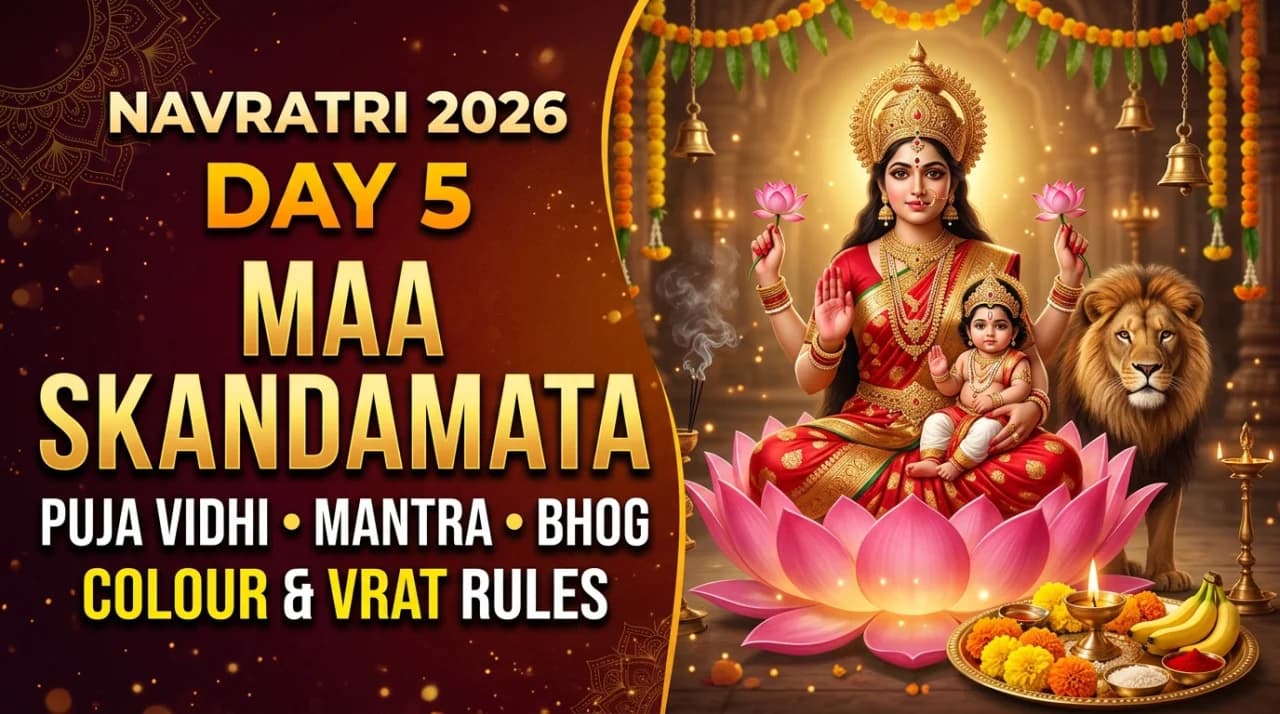
Celebrate Navratri Day 5 on October 15, 2026, by worshipping Maa Skandamata. Learn about her puja vidhi, mantra, yellow colour, banana bhog, vrat rules, and the spiritual significance of the fifth form of Maa Durga.
Imagine waking up on a festive morning, decorating your home with fresh flowers, wearing yellow clothes, and preparing a special offering for Maa Durga. The fifth day of Shardiya Navratri is dedicated to Maa Skandamata, a form of Goddess Durga who represents a mother's love, care, and divine strength. For devotees, this day is an opportunity to pray for family happiness, children's well-being, and peace at home. But who is Maa Skandamata, and what makes her worship special during Navratri?
When Is Navratri Day 5 in 2026?
Navratri Day 5 will be observed on Thursday, October 15, 2026. On this day, devotees worship Maa Skandamata, the fifth form of Goddess Durga. According to the traditional Navdurga worship sequence, each day of Navratri is dedicated to a different form of the Goddess.
Many families begin their morning with a bath, clean their puja area, offer flowers, and chant prayers. Some devotees also observe a fast according to their family customs. While rituals may differ from one region to another, the main purpose is to express devotion and seek the Goddess's blessings. And the story behind Maa Skandamata explains why she is especially associated with motherhood and protection.
Who Is Maa Skandamata?
Maa Skandamata is the fifth form of Goddess Durga and the mother of Lord Skanda, also known as Kartikeya. In Hindu traditions, Lord Skanda is associated with courage and divine leadership. Maa Skandamata's name combines “Skanda,” referring to her son, and “Mata,” meaning mother.
She is commonly depicted with four arms, seated on a lotus, with infant Skanda resting on her lap. Two of her hands hold lotus flowers, while her other hands are shown in protective or blessing gestures. In some depictions, she is seen riding a lion, representing her strength and fearless nature.
Her image beautifully combines two qualities: a mother's gentle love and a warrior Goddess's power. Devotees worship her with the belief that her blessings can bring courage, compassion, and harmony to family life. But there is another special detail associated with her worship on the fifth day.
What Is the Navratri Day 5 Colour in 2026?
The popular colour associated with Navratri Day 5 in 2026 is yellow. This bright colour is traditionally connected with happiness, optimism, warmth, and prosperity.
Devotees who follow the day-wise colour tradition may wear yellow clothes during the puja. Yellow flowers can also be used to decorate the worship area, depending on availability and family customs.
However, Navratri colour traditions can vary by region and community, so wearing yellow is a devotional choice rather than a compulsory rule. The important thing is to worship with sincerity. Along with the colour, many devotees also prepare a special offering for Maa Skandamata.
Maa Skandamata Mantra for Day 5
Devotees can chant the following mantra while worshipping Maa Skandamata:
ॐ देवी स्कन्दमातायै नमः॥
Om Devi Skandamatayai Namah
The mantra is a respectful salutation to Maa Skandamata. Devotees may chant it in the morning or during their puja, focusing on prayer and devotion. Those who regularly practise mantra chanting may repeat it 108 times using a mala, according to their personal tradition.
Another traditional verse associated with Maa Skandamata is:
सिंहासनगता नित्यं पद्माश्रितकरद्वया। शुभदास्तु सदा देवी स्कन्दमाता यशस्विनी॥
This verse praises the Goddess as the auspicious Maa Skandamata, associated with the lion throne and lotus flowers. Reciting such prayers can help devotees focus their minds before moving on to the day's puja rituals.
Maa Skandamata Puja Vidhi at Home
You do not need an elaborate setup to worship Maa Skandamata. A simple puja with flowers, a diya, and sincere prayers is enough to follow your family's devotional practice.
Here is a simple step-by-step guide:
Clean the puja area: Start your morning by cleaning the space where you worship.
Prepare the puja samagri: Keep Maa Skandamata's picture or idol, a diya, kumkum, akshat, flowers, incense, water, and fruits ready.
Light the diya: Light a diya carefully in a stable, fire-safe place. Keep it away from curtains and other flammable materials.
Offer flowers: Place yellow flowers before the Goddess, if available, and apply kumkum according to your family's custom.
Offer bhog: Present bananas or another suitable sattvic offering.
Chant the mantra: Recite “Om Devi Skandamatayai Namah” with devotion.
Perform Aarti: Conclude with Maa Durga's Aarti or a prayer followed in your family.
If you established a Navratri Kalash on the first day, you may continue worshipping it according to your family tradition. Once the puja is complete, distribute the Prasad among family members. But what should you prepare as the main offering on this day?
What Bhog Is Offered to Maa Skandamata?
Bananas are traditionally offered as bhog to Maa Skandamata on Navratri Day 5. Devotees may place ripe bananas before the Goddess during the puja and distribute them as Prasad afterwards.
Other fruits and sattvic foods may also be offered, depending on family customs. There is no need to prepare an expensive or elaborate meal to express devotion. The focus is on offering food respectfully and sharing it with others.
Many devotees associate Maa Skandamata's worship with blessings for children, family well-being, and peace. These are traditional religious beliefs, and individual experiences may differ. The day also provides a reminder to appreciate the care and support we receive from our families.
Why Is Maa Skandamata Worshipped on the Fifth Day?
Maa Skandamata's image with her child highlights the special bond between a mother and her child. Her loving form represents care, compassion, and protection, while her association with the lion reflects courage and strength.
Devotees traditionally pray to her for the well-being of their children, family happiness, wisdom, and spiritual growth. Her worship also reminds people that kindness and strength can exist together. Being caring does not mean being weak, just as being strong does not mean being unkind.
During Navratri, these values can inspire devotees to treat family members with greater patience, support children in their growth, and approach daily challenges with confidence. Along with prayer, some people also observe a vrat on this day.
Navratri Day 5 Vrat Food
People observing a Navratri fast usually follow the food rules practised in their family or region. Common fasting foods include:
Fruits and milk
Curd and nuts
Makhana
Sabudana
Kuttu flour
Singhara flour
Samak rice
Potatoes and permitted vegetables
Sendha namak, where allowed
Fasting rules differ, and not everyone follows the same restrictions. People with medical conditions, specific dietary needs, or a history of problems with restrictive eating should seek appropriate professional guidance before fasting. Devotion does not require putting your health at risk.
What Should You Do on Navratri Day 5?
On October 15, devotees can worship Maa Skandamata, chant her mantra, offer bananas, wear yellow if they follow the colour tradition, and perform Aarti. Those who observe a fast can follow their usual family practices and share Prasad with loved ones.
The message of Maa Skandamata's worship is simple: celebrate a mother's love, value your family, and face life's challenges with compassion and courage. As Shardiya Navratri continues, devotees can use this day to express gratitude, strengthen their faith, and pray for peace and well-being in their homes.
FAQs About Navratri Day 5
1. When is Navratri Day 5 in 2026?
Navratri Day 5 falls on Thursday, October 15, 2026.
2. Which Goddess is worshipped on Day 5?
Maa Skandamata, the mother of Lord Skanda or Kartikeya, is worshipped.
3. What is the Navratri Day 5 colour in 2026?
Yellow is the popular colour associated with the fifth day.
4. What is Maa Skandamata's mantra?
“ॐ देवी स्कन्दमातायै नमः॥” (Om Devi Skandamatayai Namah).
5. Which bhog is offered to Maa Skandamata?
Bananas are traditionally offered as bhog on the fifth day of Navratri.