Article
Navratri 2026 Day 7: Which Colour to Wear Today? Know Maa Kalaratri Puja, Significance and Grey Colour Meaning
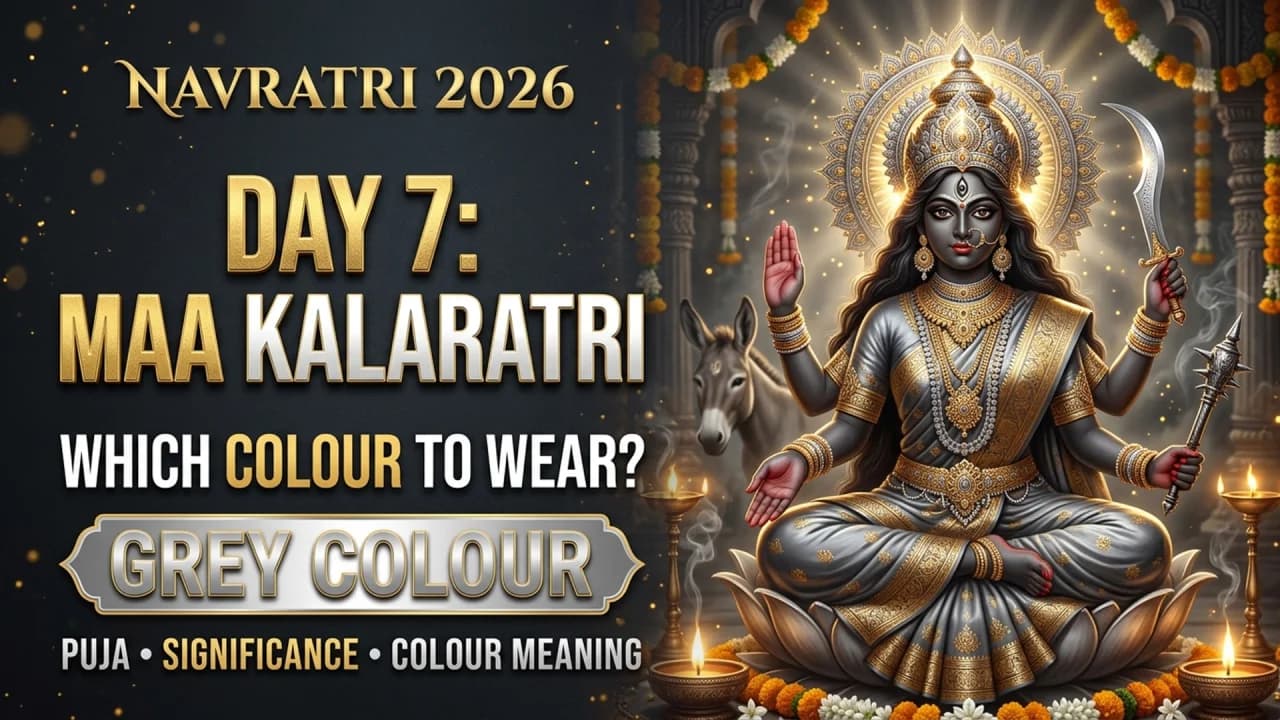
Navratri 2026 Day 7 is dedicated to Maa Kalaratri and falls on October 17. Discover today's grey colour, its significance, Maa Kalaratri puja vidhi, bhog, and the importance of Maha Saptami in Bengal's Durga Puja celebrations.
Navratri is one of the most loved Hindu festivals in India. From colourful traditional outfits and garba nights to temple visits and special prayers, the nine-day festival brings people together to celebrate devotion, faith and the power of Goddess Durga. Every day of Navratri is dedicated to a different form of the Goddess, and each form has its own story and significance.
As Sharad Navratri 2026 continues, Saturday, October 17, marks the seventh day of the festival. This day is dedicated to Maa Kalaratri, one of the fiercest forms of Goddess Durga. She is worshipped as the Goddess who destroys evil, removes darkness and gives devotees the courage to face difficult situations.
But there is another thing that many people look forward to during Navratri: the colour of the day! If you are wondering which colour to wear today, the traditional colour for Navratri Day 7 in 2026 is grey.
Let's explore the significance of grey, the story of Maa Kalaratri, the puja rituals and the special importance of Maha Saptami in Bengal.
Navratri Day 7 Colour 2026: Why Should You Wear Grey?
The colour for the seventh day of Sharad Navratri 2026 is grey. According to the day-wise colour tradition, grey represents balance, stability, composure and resilience.
Life is full of ups and downs, and sometimes we have to deal with stress, uncertainty and difficult decisions. Grey is often associated with staying calm and maintaining balance, even when situations become challenging.
For devotees, wearing the colour of the day is a simple way to participate in the festive celebrations and feel connected to the spiritual theme of Navratri.
You can include grey in your outfit in several ways. Women can choose a grey saree, kurta, suit or dupatta, while men can wear a grey kurta or another traditional outfit. If you prefer something simple, grey accessories or a small detail in your outfit can also work.
Young people who enjoy celebrating Navratri through social gatherings, garba events and family functions can also experiment with festive grey outfits.
However, remember that wearing a particular colour is a popular tradition, not a compulsory religious rule. You can worship Maa Kalaratri with devotion regardless of the colour you wear.
Navratri Day 7: Which Goddess Is Worshipped Today?
The seventh day of Navratri is dedicated to Maa Kalaratri, the seventh form of Goddess Durga.
Her name has a deep meaning. The word "Kala" is associated with time and darkness, while "Ratri" means night. Maa Kalaratri is commonly understood as the Goddess who destroys darkness and represents the power to overcome evil.
She is often depicted with a dark complexion, dishevelled hair and a fearless appearance. Traditional descriptions show her riding a donkey, with four hands carrying symbolic objects and gestures associated with protection and blessings.
Her appearance may look fierce, but her purpose is protective. She represents the divine strength needed to fight negative forces and restore peace.
According to Hindu beliefs, Maa Kalaratri protects her devotees from fear and evil influences. Her worship is associated with courage, confidence and the strength to overcome obstacles.
This is why the seventh day of Navratri holds special importance for people who pray for protection, inner strength and the ability to face life's challenges.
Significance of Maa Kalaratri: Why Is She Called the Fierce Form of Durga?
Among the nine forms of Goddess Durga worshipped during Navratri, Maa Kalaratri is known for her powerful and fierce form.
Her appearance symbolises the destruction of evil and ignorance. She reminds devotees that difficult situations should not always be avoided. Sometimes, we must face our fears directly and find the courage to move forward.
According to religious traditions, Maa Kalaratri removes darkness and protects devotees from negative forces. She is also associated with fearlessness and spiritual strength.
For many people, her message is relevant even in everyday life. Students may pray for confidence before important exams, working professionals may seek strength during difficult periods, and families may offer prayers for peace and protection.
These prayers are expressions of faith. Rather than seeing Maa Kalaratri only as a fierce Goddess, devotees also worship her as a protective mother who gives them the courage to face uncertainty.
Her form teaches an important lesson: strength does not always mean having no fear. It can also mean facing fear with faith, patience and determination.
Navratri Day 7 Puja Vidhi: How to Worship Maa Kalaratri
Devotees worship Maa Kalaratri with devotion on the seventh day of Navratri. The exact rituals can differ between families and regions, but a simple puja can be performed at home.
Here is a basic guide to the traditional worship.
1. Clean the puja area: Begin by cleaning the place where you perform your daily prayers. Keep the surroundings neat and prepare the Goddess's picture or idol.
2. Take a bath and wear clean clothes: Many devotees begin the day with a bath and wear fresh clothes before starting their puja.
3. Offer prayers to Maa Kalaratri: Light a diya safely and offer flowers, incense and other puja items according to your family traditions.
4. Chant devotional prayers: Devotees may recite Maa Kalaratri's mantras, read devotional texts or sing the Goddess's aarti.
5. Offer bhog: Fruits, sweets and other traditional offerings may be presented to the Goddess according to family customs.
6. Perform aarti: Conclude the puja with aarti and pray for courage, protection, peace and well-being for your family.
You do not need to follow elaborate rituals to make your prayers meaningful. Sincere devotion and respect for your family's traditions are important parts of worship.
Maha Saptami 2026: Why Is This Day Important in Bengal?
October 17, 2026, also coincides with Maha Saptami in Bengal's Durga Puja celebrations, according to the festival calendar provided for this article.
Durga Puja is celebrated with great enthusiasm in West Bengal. Beautifully decorated pandals, artistic idols of Goddess Durga, cultural programmes and community gatherings make this period special for devotees.
One important ritual associated with Maha Saptami is Nabapatrika Snan.
Nabapatrika refers to a group of nine plants that are ritually associated with the Goddess. During the traditional ceremony, the Nabapatrika is given a ceremonial bath before being brought into the worship area for further rituals.
The ceremony reflects the connection between religious traditions, nature and the worship of divine feminine energy.
Although the wider Navratri festival is observed across India, the way people celebrate it can look very different from one region to another. In some places, devotees focus on daily Goddess worship, while in Bengal, Durga Puja pandals and community celebrations play a major role.
Both traditions express devotion to Goddess Durga and celebrate the victory of good over evil.
Navratri 2026: Day-Wise Colours from Day 1 to Day 9
If you want to plan your festive outfits for the entire nine-day celebration, here is the day-wise colour list for Sharad Navratri 2026.
Navratri Day | Date | Colour |
|---|---|---|
Day 1 | October 11 | Orange |
Day 2 | October 12 | White |
Day 3 | October 13 | Red |
Day 4 | October 14 | Royal Blue |
Day 5 | October 15 | Yellow |
Day 6 | October 16 | Green |
Day 7 | October 17 | Grey |
Day 8 | October 18 | Purple |
Day 9 | October 19 | Peacock Green |
The colour tradition is a fun way to add excitement to the festival. Families, friends and colleagues often coordinate their outfits, share festive pictures and participate in themed celebrations.
Keep in mind that Navratri colour lists can vary according to regional traditions and the calendar followed.
Navratri Day 7 2026: Final Thoughts
The seventh day of Sharad Navratri is dedicated to Maa Kalaratri, a powerful form of Goddess Durga associated with destroying evil and protecting devotees. The traditional colour for October 17, 2026, is grey, which represents balance, stability and resilience.
Devotees can observe the day by offering prayers, performing aarti, chanting devotional hymns and following their family customs. In Bengal, Maha Saptami adds another special dimension to the celebrations through traditional rituals such as Nabapatrika Snan.
Whether you celebrate Navratri by visiting a temple, attending a garba event or performing puja at home, the festival is a reminder to stay strong, face challenges with courage and keep faith in the victory of good over evil.