Article
Navratri Day 4 Maa Kushmanda Puja 2026: Know the Puja Vidhi, Bhog, Mantra, Aarti and Significance
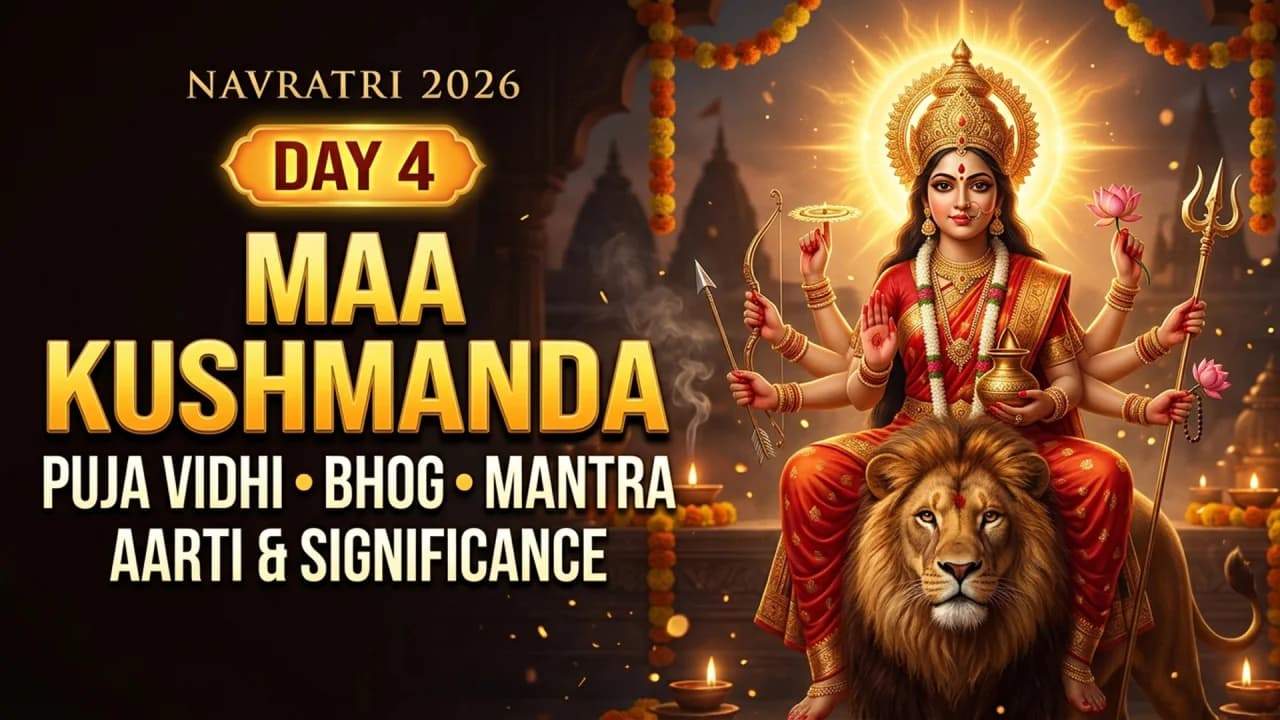
Celebrate Navratri Day 4 2026 by worshipping Maa Kushmanda. Know the puja vidhi, favourite bhog, Malpua offering, mantra, aarti and religious significance of the fourth form of Goddess Durga.
Navratri Day 4 Maa Kushmanda Puja: The fourth day of Shardiya Navratri is dedicated to Maa Kushmanda, the fourth form of Goddess Durga. According to Hindu religious beliefs, Maa Kushmanda is the goddess who created the universe with her gentle smile. Devotees worship her during Navratri and pray for happiness, peace, prosperity and positive energy in their lives. Offering Malpua as bhog, chanting her mantras and performing the aarti are some of the common traditions followed on this day.
Navratri is a special time for devotees across India. People visit temples, observe fasts, decorate their homes and offer prayers to Goddess Durga and her nine forms. Each day has its own religious importance, and the fourth day celebrates the power and blessings associated with Maa Kushmanda.
If you are planning to worship Maa Kushmanda this Navratri, here is everything you need to know about her significance, puja vidhi, favourite bhog, mantras and aarti.
Maa Kushmanda: The Fourth Form of Goddess Durga
Maa Kushmanda is worshipped as the fourth form of Navdurga. According to Hindu mythology, she created the universe with her divine smile when darkness covered everything. The name Kushmanda is traditionally associated with this belief, and she is often described as the source of creation, light and energy.
She is also known as Ashtabhuja Devi, which means the goddess with eight arms. Her eight hands are traditionally shown holding objects such as a kamandalu, bow, arrow, lotus, pot of nectar, discus, mace and rosary. These objects represent different aspects of divine power and spiritual strength. Maa Kushmanda is usually depicted riding a lion, which symbolises courage and strength.
For devotees, worshipping Maa Kushmanda is a way to express gratitude and seek blessings for a better life. Her worship is traditionally associated with positivity, confidence, good health and prosperity. Many devotees believe that praying to her helps them find inner strength and face life's challenges with courage.
These beliefs are an important part of Hindu religious traditions, and devotees celebrate the day according to their faith and family customs.
Maa Kushmanda's Favourite Bhog
Offering bhog is an important part of Hindu puja. On the fourth day of Navratri, Malpua is traditionally offered to Maa Kushmanda by many devotees. Malpua is a popular Indian sweet prepared using ingredients such as flour, milk and sugar, with recipes varying across households and regions.
Apart from Malpua, devotees may offer fresh fruits, sweets and other satvik food items. The choice of bhog can depend on family traditions and personal preferences.
Here are a few simple things to remember while preparing the offering:
Keep the kitchen and puja area clean.
Prepare the bhog with care and devotion.
Use fresh ingredients wherever possible.
Offer the food to the goddess before distributing it as prasad.
Follow your family's traditional practices, especially if you are observing a Navratri fast.
The purpose of offering bhog is to express love, gratitude and devotion. You do not necessarily need an elaborate arrangement to pray sincerely.
Maa Kushmanda Puja Vidhi for Navratri Day 4
If you want to perform Maa Kushmanda Puja at home, you can follow these simple steps. The exact rituals may differ depending on regional and family traditions.
Step 1: Clean the puja area
Begin your day by bathing and wearing clean clothes. Clean the place where you plan to perform the puja and arrange the necessary items.
Step 2: Light a diya
Place an image or idol of Maa Durga or Maa Kushmanda in your puja area. Light a diya and, if you usually do so, incense sticks.
Step 3: Offer flowers and puja items
Offer fresh flowers, roli, chandan and akshat (rice grains) to the goddess. You can also offer other traditional puja items according to your family's customs.
Step 4: Offer bhog
Prepare Malpua or another satvik food offering and place it before the goddess. Fruits and sweets can also be offered as per your tradition.
Step 5: Chant Maa Kushmanda's mantra
Sit peacefully and chant the goddess's mantra with devotion. You can repeat it several times according to your preference and the time available.
Step 6: Perform the aarti
Conclude the puja by performing Maa Durga's or Maa Kushmanda's aarti. Pray for the happiness, peace and well-being of your family.
If you do not have all the traditional puja items, you can still offer your prayers with sincerity and use whatever is available, following your family's customs.
Maa Kushmanda Puja Mantra
Chanting mantras is a common part of Navratri worship. Devotees recite Maa Kushmanda's mantra while praying for her blessings.
Maa Kushmanda Beej Puja Mantra:
ॐ देवी कूष्माण्डायै नमः॥
Maa Kushmanda Stuti Mantra:
सुरासम्पूर्णकलशं रुधिराप्लुतमेव च।
दधाना हस्तपद्माभ्यां कूष्माण्डा शुभदास्तु मे॥
Devotees may chant these mantras during the puja or while meditating on the goddess. The stuti is traditionally recited as a prayer for auspiciousness and divine grace.
You do not need to rush through the mantra. Take a few peaceful moments to focus on your prayer and understand the meaning behind the ritual.
Maa Kushmanda Aarti
After completing the puja, devotees can perform the aarti of Maa Kushmanda or sing a traditional Durga Mata aarti. One commonly recited Maa Kushmanda aarti begins with the following lines:
Kushmanda Jai Jag Sukhdaani,
Mujh Par Daya Karo Maharani.
Pingala Jwalamukhi Niraali,
Shakambhari Maa Bholi-Bhaali.
Laakhon Naam Niraale Tere,
Bhakt Kai Matwaale Tere.
Bheema Parvat Par Hai Dera,
Sweekaaro Pranaam Yeh Mera.
Sabki Sunti Ho Jagdambe,
Sukh Pahunchati Ho Maa Ambe.
Tere Darshan Ka Main Pyaasa,
Poorn Kar Do Meri Aasha.
Maa Ke Mann Mein Mamta Bhaari,
Kyon Na Sunogi Arj Hamaari.
Tere Dar Par Kiya Hai Dera,
Door Karo Maa Sankat Mera.
Mere Kaaj Poore Kar Do,
Mere Tum Bhandare Bhar Do.
Tera Daas Tujhe Hi Dhyaaye,
Bhakt Tere Dar Sheesh Jhukaaye.
Aarti is a way for devotees to express their love and devotion to the goddess. Families may sing different versions depending on their region and religious tradition.
Why Is Maa Kushmanda Worshipped on the Fourth Day of Navratri?
Each of the nine days of Navratri is dedicated to a different form of Goddess Durga. Maa Kushmanda is worshipped on the fourth day because she represents the creative energy associated with the beginning of the universe in Hindu mythology.
Her bright and powerful form is often connected with light, energy and new beginnings. Devotees pray to her for courage, confidence and the strength to overcome difficulties. Her worship also reminds people to stay hopeful and positive, even when life feels challenging.
For young devotees, Navratri can be an opportunity to connect with family traditions, learn about Hindu mythology and spend some time in prayer and reflection. Whether you visit a temple or perform a simple puja at home, the festival offers a chance to pause, feel grateful and seek peace.
Conclusion
Maa Kushmanda Puja on Navratri Day 4 is an important part of the nine-day festival dedicated to Goddess Durga. From offering Malpua and chanting the goddess's mantra to performing the aarti, devotees follow different traditions to express their faith.
As you celebrate this day, remember that rituals can be simple and meaningful. Offer your prayers with sincerity, follow your family's customs and pray for happiness, peace and well-being for yourself and your loved ones.
May Maa Kushmanda bless everyone with positivity, courage and prosperity.