Article
Navratri Day 9 2026: Maa Siddhidatri Puja Vidhi, Mantra, Bhog, Colour and Significance
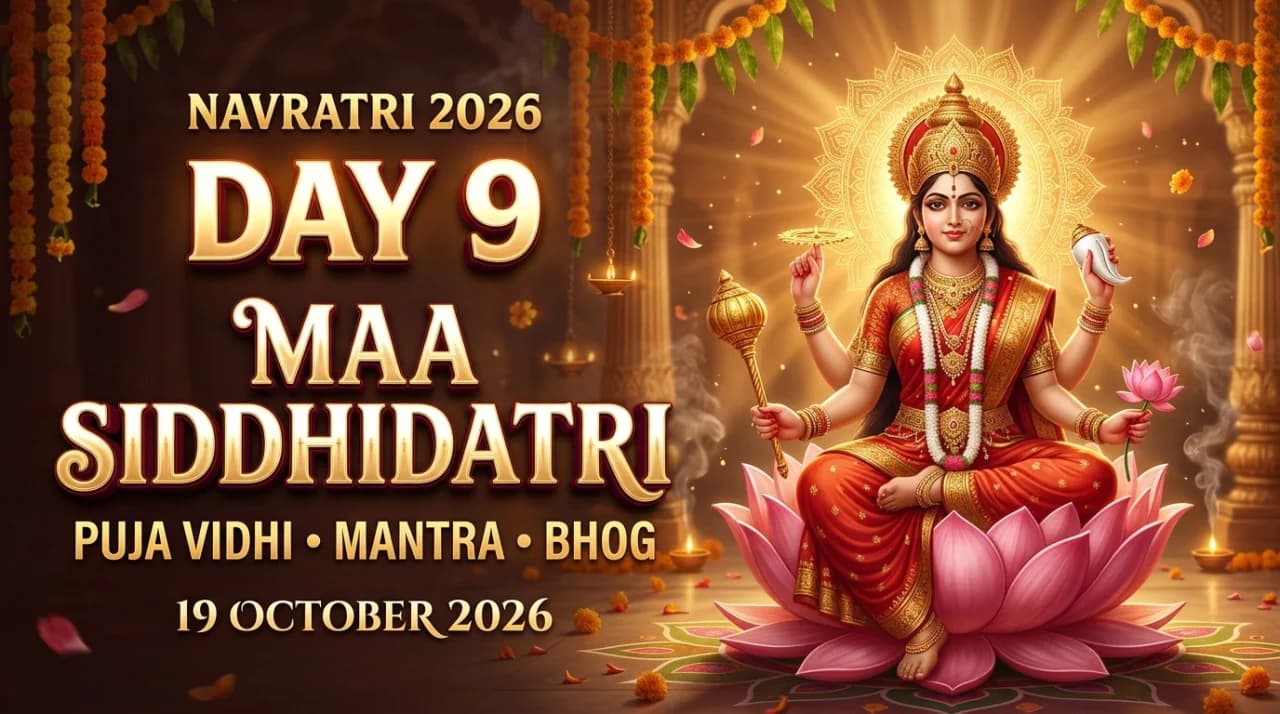
Navratri Day 9 falls on October 19, 2026, and is dedicated to Maa Siddhidatri, the ninth form of Goddess Durga. Discover the puja vidhi, sacred mantra, traditional bhog, peacock green colour, Kanya Puja rituals and the spiritual significance of Maha Navami. Learn how to worship Maa Siddhidatri at home and seek blessings for wisdom, peace, prosperity and spiritual growth.
The nine days of Shardiya Navratri are dedicated to the different forms of Goddess Durga. Each day has its own importance, rituals and spiritual meaning. The ninth day holds special significance because devotees worship Maa Siddhidatri, the ninth and final form of Goddess Durga.
In 2026, Navratri Day 9 is observed on Monday, October 19. The day is associated with Maha Navami, when devotees offer prayers, perform traditional rituals and seek the goddess's blessings for wisdom, peace, prosperity and spiritual growth.
Maa Siddhidatri is believed to bless her devotees with siddhis, which refer to spiritual accomplishments or divine powers in Hindu tradition. Her worship also represents the completion of the nine-day journey of devotion.
Let's explore the date, puja vidhi, mantra, bhog, colour and significance of Maa Siddhidatri worship.
Navratri Day 9 2026: Date, Goddess and Colour
Here are the important details for the ninth day of Navratri:
Date: Monday, October 19, 2026
Day: Day 9 of Shardiya Navratri
Goddess: Maa Siddhidatri
Colour: Peacock green, according to the 2026 colour calendar
Traditional bhog: Sesame seeds, fruits and sweets
Important rituals: Maha Navami Puja, Havan and Kanya Puja
The exact timing of Navami rituals can differ according to the local Panchang and family traditions. Since Ashtami and Navami tithis fall around October 18–19 in 2026, devotees should check their local Panchang before planning Kanya Puja or Havan.
Who Is Maa Siddhidatri?
Maa Siddhidatri is the ninth form of Goddess Durga and is worshipped on the final day of Navratri. Her name has a beautiful meaning. The word Siddhi refers to accomplishment or spiritual perfection, while Datri means giver.
Together, the name Siddhidatri means the giver of siddhis. According to Hindu religious beliefs, the goddess represents divine wisdom, spiritual fulfilment and the power to overcome obstacles.
Maa Siddhidatri is commonly shown sitting on a lotus or riding a lion. She has four arms and is traditionally depicted holding a lotus, a mace, a discus and a conch. These symbols are associated with spiritual purity, strength, protection and divine authority.
For devotees, worshipping Maa Siddhidatri is not only about asking for material prosperity. It is also an opportunity to pray for better understanding, inner strength, peace of mind and the ability to make wise decisions.
Maa Siddhidatri Puja Vidhi for Navratri Day 9
Devotees can perform Maa Siddhidatri Puja at home using simple arrangements and traditional offerings. The rituals may vary from one family to another, but these steps provide a basic guide.
1. Clean the puja area
Wake up in the morning, take a bath and clean the place where you perform your daily prayers. Place a picture or idol of Maa Siddhidatri in the prayer area.
2. Prepare the puja thali
Arrange flowers, kumkum, akshat, incense sticks, a diya, fruits and sweets on a clean plate. Keep the items you normally use during Navratri worship ready.
3. Begin with prayers
Offer prayers to Lord Ganesha and worship the Navratri kalash if you established one on the first day. Follow your family traditions while beginning the puja.
4. Offer flowers and bhog
Offer fresh flowers, fruits, coconut and traditional sweets to Maa Siddhidatri. Sesame seeds are also associated with offerings in some devotional traditions.
5. Chant the goddess's mantra
Sit peacefully and recite Maa Siddhidatri's mantra. You can chant it 11, 21 or 108 times, depending on your personal practice.
6. Read the katha and perform aarti
Read or listen to the story of Maa Siddhidatri and perform the aarti. Pray for wisdom, happiness, family wellbeing and spiritual growth.
7. Complete the Navami rituals
Families that observe Navami Havan or Kanya Puja can perform these rituals according to their regional customs and the relevant tithi timings.
Maa Siddhidatri Mantra and Its Meaning
One of the mantras traditionally recited while worshipping Maa Siddhidatri is:
॥ ॐ देवी सिद्धिदात्र्यै नमः ॥
Om Devi Siddhidatryai Namah
Meaning: I bow to Goddess Siddhidatri, the divine giver of spiritual accomplishments.
Devotees chant this mantra while offering flowers or sitting quietly in prayer. It expresses devotion and the desire to receive the goddess's blessings.
For many worshippers, mantra chanting is also a way to create a peaceful environment, focus their thoughts and end the nine-day festival with gratitude.
Navratri Day 9 Bhog: What Should You Offer Maa Siddhidatri?
Bhog is an important part of Hindu worship because it represents love, gratitude and devotion towards the deity. On Navratri Day 9, devotees offer food according to their family traditions.
Some commonly offered items include:
Sesame seeds or sweets prepared with sesame.
Fresh fruits and coconut.
Homemade sweets and other traditional vegetarian preparations.
Halwa, puri and black chana for Kanya Puja.
The specific offerings can vary across regions and households. Prepare the food with care, offer it during the puja and distribute the prasad among family members after worship.
Kanya Puja on Maha Navami 2026
Kanya Puja, also known as Kanjak Puja in some regions, is one of the important traditions associated with Navratri. During this ritual, young girls are honoured as representations of the divine feminine.
Families usually welcome the girls respectfully, apply tilak and offer prayers. Washing their feet is also part of the ritual in some households. Traditional food such as halwa, puri and black chana may be served, followed by prasad or small gifts.
Some families also honour a young boy as Bhairav, according to their customs.
Kanya Puja is generally performed on Ashtami or Navami. The preferred day and timing depend on family tradition and the local Panchang. In 2026, devotees should check the relevant tithi timings before deciding when to perform the ritual.
The central message of Kanya Puja is respect for girls and the feminine divine, along with gratitude and devotion.
Navratri Day 9 Colour 2026: Peacock Green
Peacock green is the colour associated with the ninth day of Navratri in the 2026 colour calendar.
This beautiful shade is often connected with renewal, harmony and growth. These ideas match the spiritual message of the final day, when devotees complete their worship of the nine forms of Goddess Durga.
You can wear peacock green clothing or include the colour in your festive decorations if you wish. However, wearing a particular colour is a customary practice, not a compulsory condition for worship.
Maa Siddhidatri Katha and the Significance of Maha Navami
According to Hindu religious traditions, Maa Siddhidatri is the divine form who grants siddhis and represents spiritual perfection. Her worship is associated with the completion of the Navadurga journey.
Her four-armed form carries symbols that represent different aspects of divine power. The lotus is associated with purity, while the conch, discus and mace are connected with divine authority, protection and strength.
Maha Navami is important because it marks the concluding stage of Navratri worship. Devotees perform prayers, chant mantras, offer bhog and participate in Havan or Kanya Puja according to their customs.
The day also encourages people to reflect on the values of faith, discipline, kindness and gratitude. After nine days of worship, many families gather together, share prasad and prepare for Vijayadashami.
In 2026, Vijayadashami, also known as Dussehra, falls on Tuesday, October 20.
Frequently Asked Questions
1. When is Navratri Day 9 in 2026?
Navratri Day 9 is observed on Monday, October 19, 2026. The day is dedicated to Maa Siddhidatri and is associated with Maha Navami worship.
2. Which goddess is worshipped on Day 9 of Navratri?
Maa Siddhidatri, the ninth form of Goddess Durga, is worshipped on the final day of Navratri.
3. What is the Navratri Day 9 colour in 2026?
Peacock green is the colour associated with Day 9 in the 2026 Navratri colour calendar.
4. What is the mantra of Maa Siddhidatri?
The mantra is Om Devi Siddhidatryai Namah. Devotees recite it to express their devotion and seek the goddess's blessings.
5. What bhog is offered to Maa Siddhidatri?
Sesame seeds, fruits, coconut and sweets are among the traditional offerings. Halwa, puri and black chana are commonly prepared for Kanya Puja.
6. Can Kanya Puja be performed on Navratri Day 9?
Yes. Many families perform Kanya Puja on Ashtami or Navami, depending on their customs and the prevailing tithi. Check your local Panchang for the appropriate timing in 2026.
Conclusion
Maa Siddhidatri worship brings the nine-day journey of Navratri to a meaningful conclusion. Through prayers, mantra chanting, bhog and traditional rituals, devotees seek blessings for wisdom, peace, prosperity and spiritual progress.
Whether you perform a detailed puja or offer a simple prayer at home, the important thing is to approach the occasion with devotion and gratitude. Maha Navami reminds us that faith is not only about rituals but also about developing patience, kindness and a positive attitude towards life.