Article
Shardiya Navratri Day 4: Worship Maa Kushmanda for Health and Well-Being, Know the Auspicious Muhurat, Vrat Katha and Powerful Mantra
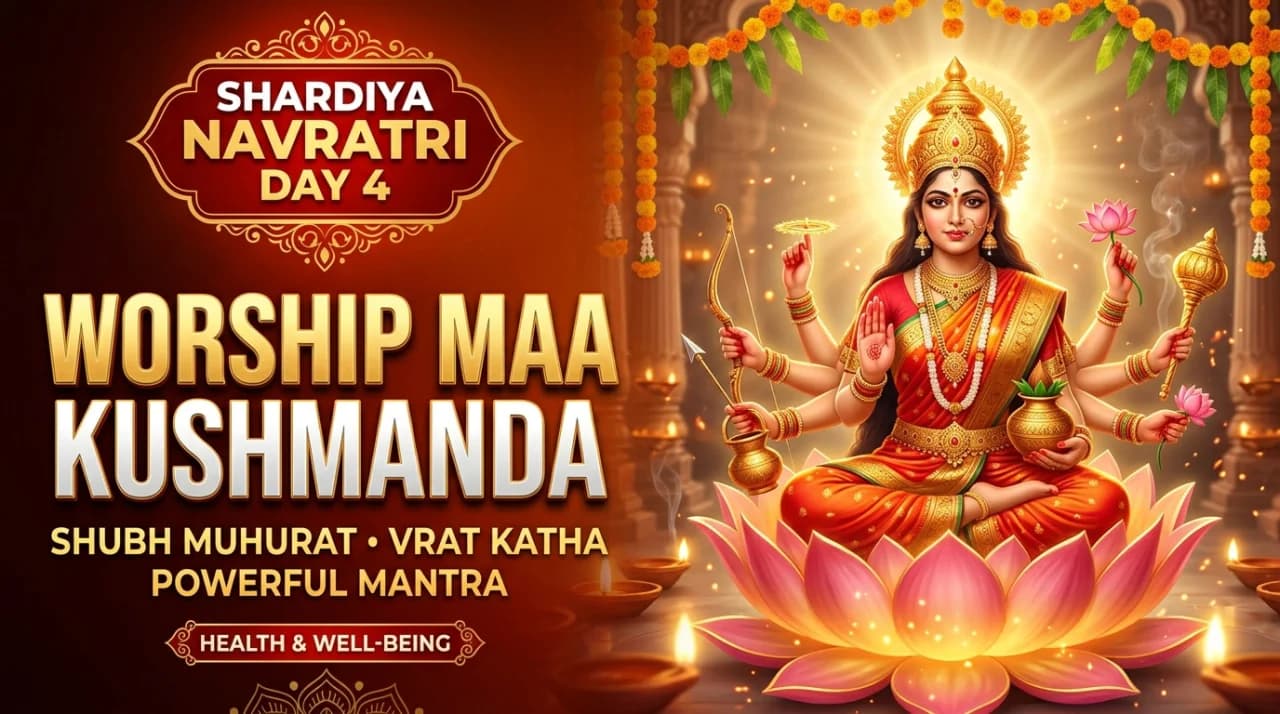
Worship Maa Kushmanda on Shardiya Navratri Day 4, 2026. Know the shubh muhurat, puja vidhi, bhog, vrat katha, mantra and aarti, along with the religious significance of this auspicious day.
Shardiya Navratri is one of the most important Hindu festivals in India. During these nine days, devotees worship the nine forms of Goddess Durga and pray for happiness, good health, peace and prosperity. Each day is dedicated to a different form of the goddess, and the fourth day is dedicated to Maa Kushmanda.
Maa Kushmanda is believed to be the creator of the universe. According to Hindu religious beliefs, she created the universe with her divine smile and filled it with light and energy. Devotees worship her with great faith and offer prayers for strength, happiness and well-being.
During Navratri, many people follow traditional rituals, chant mantras, prepare special bhog and observe fasts. If you are planning to worship Maa Kushmanda, here is everything you need to know about her significance, puja vidhi, shubh muhurat, favourite bhog, mantra and vrat katha.
Who Is Maa Kushmanda? Know Her Divine Form
Maa Kushmanda is the fourth form of Goddess Durga and is worshipped on the fourth day of Sharad Navratri. Her name is traditionally associated with the creation of the universe. According to Hindu mythology, darkness existed before creation, and Maa Kushmanda brought light into the universe through her divine smile.
She is also known as Ashtabhuja Devi because she is traditionally depicted with eight arms. Each hand holds a different object, including a kamandalu, bow, arrow, lotus, chakra, mace, rosary and a pot of nectar.
These objects represent different aspects of divine power, spiritual knowledge, strength and prosperity. Maa Kushmanda is generally shown riding a lion, which symbolises courage and power.
The goddess is also associated with the Sun and its life-giving energy. Her radiant form represents light, warmth and the energy that sustains the universe.
Devotees worship Maa Kushmanda to seek blessings for good health, happiness, confidence and prosperity. Her worship also reminds people to remain hopeful and positive during difficult times.
Maa Kushmanda Puja Shubh Muhurat 2026
Devotees often prefer to perform puja during an auspicious time. The following timings were provided for Maa Kushmanda Puja:
Brahma Muhurat: 4:54 AM to 5:43 AM
Abhijit Muhurat: 11:44 AM to 12:30 PM
Vijay Muhurat: 2:22 PM to 3:09 PM
Amrit Kaal: 4:14 PM to 5:57 PM
Godhuli Muhurat: 6:17 PM to 6:42 PM
Note: These timings should be verified against a reliable Panchang for the relevant city and date before publication, as muhurat timings vary by location.
Devotees can choose a suitable time according to their family traditions and local Panchang. If they cannot perform puja during a specific muhurat, they can offer prayers at another convenient time with devotion.
Maa Kushmanda Puja Vidhi: How to Worship the Goddess
Performing Maa Kushmanda Puja at home does not have to be complicated. Devotees can follow these simple steps according to their family customs.
Step 1: Clean the Puja Area
Wake up early in the morning, take a bath and clean the place where you perform puja. Wear clean clothes and prepare the puja items, including flowers, rice, roli, a diya, incense sticks and bhog.
Step 2: Place the Idol or Picture
Place the idol or picture of Maa Kushmanda on a clean platform. If you have already performed Ghatasthapana, worship the kalash according to your family tradition.
Step 3: Light a Diya and Offer Flowers
Light a diya in front of the goddess and offer flowers, roli and akshat. You can also offer incense and other traditional puja items.
Step 4: Offer Bhog to Maa Kushmanda
Prepare a traditional sweet offering and place it before the goddess. Malpua, pumpkin-based sweets, halwa or other sweets can be offered according to family customs.
Step 5: Chant the Mantra
Chant Maa Kushmanda's mantra with a calm mind. You can repeat it 11, 21, 51 or 108 times, depending on your preference and available time.
Step 6: Read the Vrat Katha and Perform Aarti
Read or listen to Maa Kushmanda's vrat katha and perform the aarti. Finally, pray for the well-being of your family and distribute the prasad among family members.
Maa Kushmanda Mantra for Navratri Day 4
Chanting the goddess's mantra is an important part of the worship for many devotees. The following mantra is commonly used during Maa Kushmanda Puja:
ॐ देवी कूष्माण्डायै नमः॥
Om Devi Kushmandayai Namah.
Devotees may chant this mantra 11, 21, 51 or 108 times according to their personal practice. It can be recited during morning puja or while meditating before the goddess.
Many devotees believe that chanting the mantra with faith helps bring peace of mind and strengthens their connection with the divine. It is also an opportunity to pause, reflect and begin the day with positive thoughts.
What Is Maa Kushmanda's Favourite Bhog?
Offering bhog is an important part of Navratri worship. According to popular religious traditions, Maa Kushmanda is associated with kushmanda, or pumpkin, and devotees may offer pumpkin-based sweets as bhog.
Here are some offerings you can prepare at home:
Pumpkin-based sweets: A traditional offering associated with the goddess.
Halwa: Kesari halwa or another homemade sweet can be offered.
Malpua: A popular festive sweet that some devotees include in their offerings.
Yellow-coloured sweets: Traditional sweets in yellow or saffron shades may also be offered according to family customs.
Fresh fruits: Fruits are a simple option for devotees who prefer a lighter offering.
The choice of bhog can vary from one household to another. Prepare the offering with cleanliness and devotion, following any dietary rules observed by your family during Navratri.
Maa Kushmanda Vrat Katha
According to Hindu religious beliefs, the universe did not exist in its present form before creation, and darkness surrounded everything. At that time, Maa Kushmanda manifested her divine energy and created the universe through her gentle smile.
Her divine light spread throughout creation, bringing energy and brightness to the universe. This is why she is worshipped as a form of Adi Shakti and associated with the origin of creation.
Maa Kushmanda is known as Ashtabhuja Devi because she is depicted with eight arms. The objects in her hands represent divine strength, wisdom, protection and spiritual power. She is also associated with the Sun, whose energy supports life.
Devotees remember this story during Navratri to reflect on the power of creation, hope and positive energy. Worshipping Maa Kushmanda is a way to express gratitude and pray for strength and well-being.
Maa Kushmanda Aarti
Devotees perform Maa Kushmanda's aarti after the puja and mantra chanting. A commonly recited devotional aarti begins with the following lines:
कूष्मांडा जय जग सुखदानी।
मुझ पर दया करो महारानी॥
पिंगला ज्वालामुखी निराली।
शाकंभरी माँ भोली भाली॥
Devotees may recite the complete aarti followed by prayers for peace, happiness and the well-being of their loved ones. Different versions of devotional aartis may be followed in different households.
Conclusion
Maa Kushmanda Puja is an important part of Shardiya Navratri. As the fourth form of Goddess Durga, she represents creation, light and divine energy. Devotees celebrate this day by offering flowers and sweets, chanting mantras, reading her vrat katha and performing aarti.
Whether you perform a detailed puja or offer a simple prayer at home, you can observe the day according to your family's traditions and personal faith. Navratri is also a reminder to welcome positivity, show kindness and spend meaningful time with loved ones.
Disclaimer: Religious rituals, stories and offerings can vary across traditions. The information above describes common devotional practices and should not be taken as a guarantee of health or other outcomes.