Blog
Dussehra 2026: Ravana Had Knowledge, Wealth and Power, Yet These 3 Mistakes Led to His Downfall
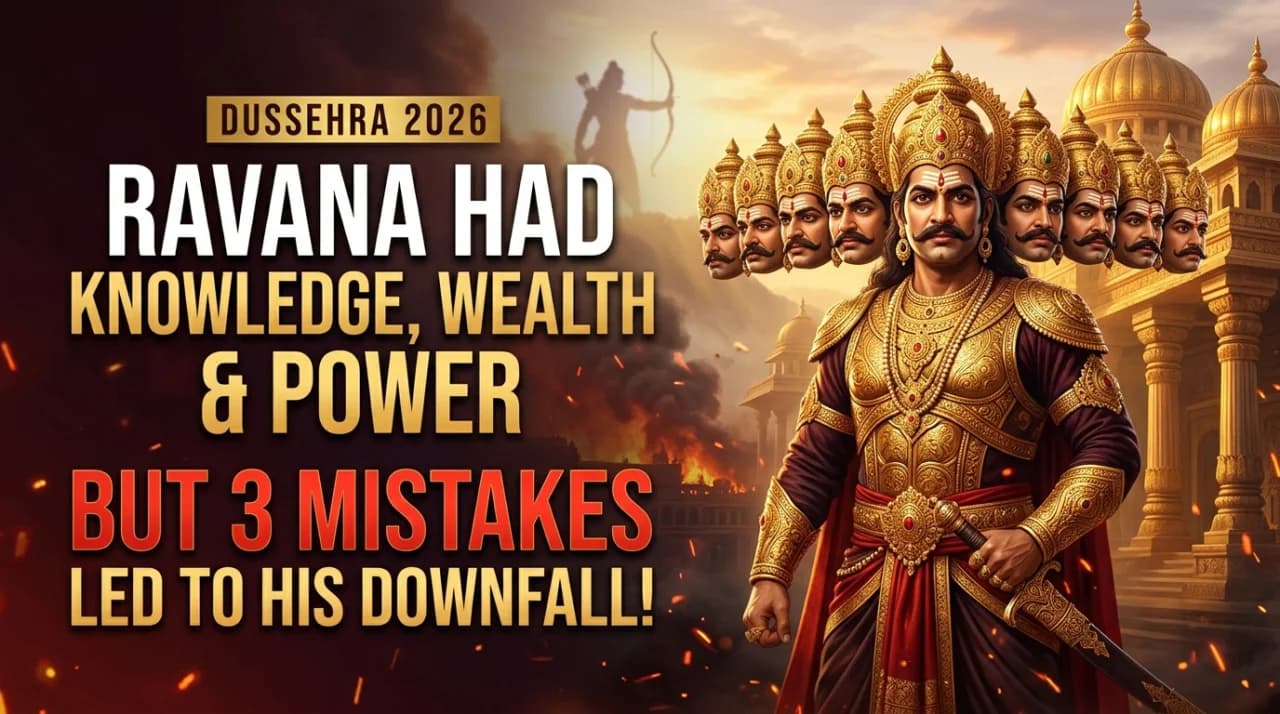
Dussehra 2026 celebrates the victory of good over evil and reminds us of the lessons from Ravana’s downfall. Discover how ego, wrong intentions and stubbornness led to Ravana’s defeat despite his knowledge, wealth and power. Learn three important life lessons from the Ramayana and understand the true significance of Vijayadashami.
Dussehra is one of the most important Hindu festivals celebrated across India. Every year, people watch the burning of Ravana's effigy, enjoy festive events and celebrate the victory of good over evil. But have you ever wondered why Ravana, despite being so intelligent and powerful, met such a tragic end?
According to the Hindu epic Ramayana, Ravana was not an ordinary king. He was known for his knowledge, strength, wealth and powerful kingdom of Lanka. He was a great scholar who had studied sacred texts and possessed remarkable abilities. Yet, all these qualities could not save him from his downfall.
The story of Ravana teaches us an important lesson: having knowledge and power is not enough if we fail to make the right decisions. Ego, wrong intentions and stubbornness can destroy even the most successful person.
As Dussehra 2026 approaches, let's look at three major mistakes associated with Ravana's downfall and understand what we can learn from his story today.
1. Ego: When Pride Becomes More Important Than Wisdom
Ravana was known for his intelligence and knowledge of the Vedas. He was also a powerful ruler who controlled the prosperous kingdom of Lanka. According to traditional accounts, he had earned great powers through intense penance and devotion.
However, his biggest weakness was his growing ego. He became so confident in his own abilities that he started believing nobody could defeat him. Instead of using his knowledge to make wise decisions, he allowed his pride to influence his actions.
One of his major mistakes was underestimating Lord Rama. Ravana failed to understand that Lord Rama was not someone he could dismiss simply because he considered himself more powerful.
His overconfidence eventually contributed to his downfall.
What can we learn from this?
In today's world, people often become successful through education, hard work, money or professional achievements. While success is something to celebrate, it should never make us feel superior to others.
For example, a student who scores excellent marks but refuses to listen to teachers may miss important lessons. Similarly, a person who becomes successful at work but ignores feedback can make mistakes that could have been avoided.
Ravana's story reminds us that true intelligence includes knowing our limits, respecting others and being willing to learn. Confidence can help us move forward, but uncontrolled ego can lead us in the wrong direction.
2. Wrong Intentions: The Abduction of Mata Sita
The second major mistake associated with Ravana was the abduction of Mata Sita.
According to the Ramayana, Ravana took Mata Sita to Lanka through deception while she was living in the forest with Lord Rama and Lakshmana. He kept her in Ashoka Vatika, where she refused to accept him and remained devoted to Lord Rama.
This act became a major turning point in the story. Lord Rama set out to rescue Mata Sita, and a great battle followed between Rama's forces and Ravana's army.
Ravana had a powerful kingdom, a strong army and considerable resources. However, his decision to abduct Mata Sita brought a conflict that eventually led to the destruction of his power.
His actions also affected the people around him. The war caused enormous suffering and loss, including the deaths of warriors and members of his own family.
Had Ravana respected Mata Sita and avoided this wrongful act, the events that followed could have been very different.
What can we learn from this?
Our intentions matter just as much as our abilities. Making a decision without considering its impact on others can create problems that are difficult to reverse.
In everyday life, this could mean lying to get ahead, breaking someone's trust for personal benefit or hurting another person to achieve a goal. Such choices may appear useful in the beginning, but they can damage relationships and create long-term consequences.
Ravana's story reminds us that strength should never be used to control or harm others. Respect, honesty and responsibility are important qualities, regardless of how powerful or successful a person becomes.
3. Stubbornness: Refusing to Listen to Good Advice
Ravana's third major mistake was refusing to accept advice, even when his decisions were putting his kingdom at risk.
According to the Ramayana, his brother Vibhishana repeatedly advised him to return Mata Sita to Lord Rama and avoid further conflict. Other well-wishers also warned Ravana about the dangers of continuing the war.
However, Ravana refused to change his decision. His pride made it difficult for him to admit that he had made a mistake.
Instead of thinking about the safety of Lanka and its people, he continued to follow his own path. As the conflict grew, Ravana lost his warriors, members of his family and eventually his kingdom's security. The battle ended with Lord Rama defeating him.
His downfall shows how refusing to listen can turn a bad situation into a much bigger disaster.
What can we learn from this?
There is a difference between being determined and being stubborn. Determination helps us work towards our goals, while stubbornness can stop us from recognising when we are wrong.
Imagine a person making a financial decision that is clearly not working. If they refuse to listen to sensible advice simply because they do not want to admit their mistake, they may lose even more money.
The same thing can happen in friendships, family relationships, education and professional life. Sometimes, accepting our mistake is the first step towards solving a problem.
Ravana's story teaches us that listening to others does not make us weak. In fact, the ability to accept advice, change direction and apologise when necessary can be a sign of maturity.
Dussehra 2026: The Religious Significance of Vijayadashami
Dussehra, also known as Vijayadashami, celebrates the victory of good over evil. According to the Ramayana tradition, Lord Rama defeated Ravana and rescued Mata Sita. This victory is remembered through religious ceremonies, cultural performances and the burning of Ravana's effigy.
The festival is celebrated in different ways across India. In many places, people organise Ramlila performances that bring scenes from the Ramayana to life. The celebrations often conclude with the burning of effigies representing Ravana, Meghnath and Kumbhkaran.
For devotees, the festival represents the belief that wrongdoing cannot ultimately defeat righteousness. It also offers an opportunity to reflect on our own actions and the choices we make.
Dussehra is not only about remembering the defeat of Ravana. It is also about recognising the negative qualities that people may struggle with in everyday life, such as pride, anger, greed and dishonesty.
The festival encourages us to replace these qualities with humility, kindness, truthfulness and respect for others.
Conclusion: What Ravana's Story Teaches Us Today
Ravana's story remains relevant because it shows that even a person with great knowledge, wealth and power can make decisions that lead to destruction.
His ego stopped him from recognising his limitations. His wrongful actions against Mata Sita led to a devastating conflict. His stubbornness prevented him from listening to advice that could have helped him avoid further loss.
These three lessons are worth remembering beyond Dussehra. Whether we are students, professionals or business owners, our success depends not only on what we know but also on how we treat others and respond to our mistakes.
This Dussehra, let us celebrate the victory of good over evil while also reflecting on the changes we can make in our own lives. By controlling our ego, respecting others and learning to accept good advice, we can make better decisions and build stronger relationships.
After all, the real message of Dussehra is not just about burning an effigy of Ravana. It is also about making an effort to overcome the negative qualities within ourselves.