Blog
Karwa Chauth 2026: Why Do Women Wait for the Moon?
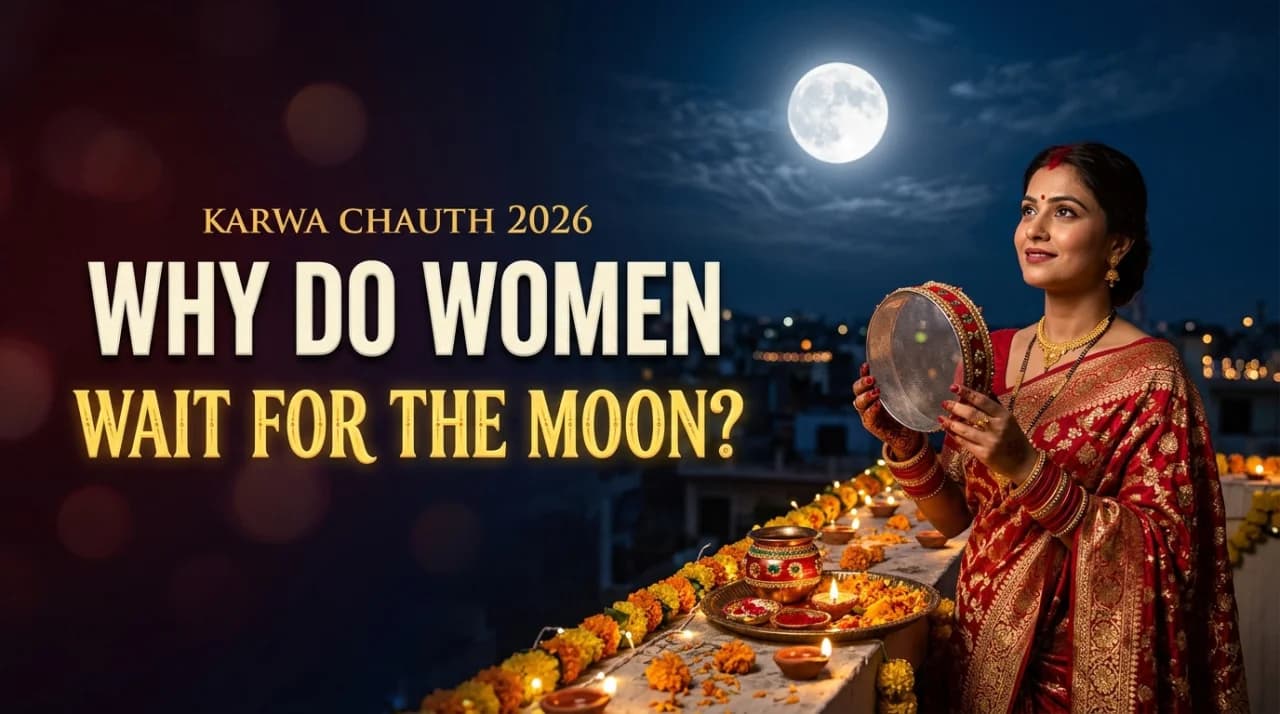
Why do women wait for the moon on Karwa Chauth? Explore the spiritual meaning of moon worship, the sieve ritual, fasting traditions and the importance of moonrise during Karwa Chauth 2026.
Karwa Chauth is one of the most popular Hindu festivals, especially in North India. It is a day when many married women observe a fast and pray for the long life, health and happiness of their husbands. From applying beautiful mehndi designs to wearing traditional outfits and performing evening puja, the festival is filled with meaningful customs.
But one thing makes Karwa Chauth different from many other festivals: the fast is traditionally completed only after sighting the moon. Women wait throughout the day for this special moment, and the moon becomes the main focus of the evening rituals.
So, why is the moon so important on Karwa Chauth? What does moon worship mean, and why do women look at the moon through a sieve? Let's explore the traditions and beliefs behind this beautiful festival.
1. Why Is the Moon Important on Karwa Chauth?
The moon is central to Karwa Chauth because it determines when the traditional fast comes to an end. Many women begin their fast before sunrise and continue without food or water until they sight the moon in the evening.
The word Karwa refers to the pot traditionally used during the puja, while Chauth means the fourth day of the lunar fortnight. The festival is observed on Krishna Paksha Chaturthi, the fourth day of the waning moon phase, according to the Hindu lunar calendar.
Unlike festivals celebrated on a fixed date every year, Karwa Chauth follows the lunar calendar. This is why its date changes from year to year, usually falling in October or November.
For devotees, waiting for the moon is not just about knowing when to eat again. It is an important part of the religious observance. The moment the moon appears, women offer prayers, perform the prescribed rituals and complete their fast according to their family traditions.
2. The Moon's Place in Hindu Tradition
The moon has held a special place in Hindu religious traditions for centuries. It is commonly associated with peace, calmness, beauty and the natural cycles of life.
In Hindu mythology, Chandra Dev is worshipped as the Moon God. The moon is also associated with Soma in ancient Indian religious traditions, where its symbolism connects with sacred rituals and the idea of nourishment.
In traditional Hindu thought, the moon is also linked with the mind and emotions. Its changing phases are often seen as a reminder that life moves through different stages.
During Karwa Chauth, women traditionally offer prayers to the moon for their husbands' well-being and their family's happiness. The evening puja may also include the worship of Goddess Parvati, Lord Shiva, Lord Ganesha and Lord Kartikeya.
Goddess Parvati is especially important because she represents devotion, strength and marital harmony in Hindu tradition.
These beliefs give the moon a deeper meaning during Karwa Chauth. It becomes more than a beautiful sight in the night sky; it becomes part of a prayerful moment filled with hope and devotion.
3. Why Does the Fast End Only After Moonrise?
One of the most common questions about Karwa Chauth is why women wait for moonrise instead of ending the fast at a fixed time.
The answer lies in the traditional rules of the vrat. The fast is connected to the moon's appearance, and sighting it marks the completion of the day's religious observance.
For many women, the day begins with sargi, a pre-dawn meal traditionally prepared or given by the mother-in-law. After this meal, the fast continues until the moon is sighted.
The long wait requires patience and discipline. Women may spend the day preparing for puja, getting dressed, meeting family members and participating in traditional gatherings.
When the moon finally appears, they offer arghya, which involves offering water to the Moon God. This ritual is followed by prayers and the customary process of breaking the fast.
For devotees, this moment represents the completion of a day spent in prayer. It also brings relief, happiness and a feeling of spiritual fulfilment after hours of waiting.
4. What Is the Meaning of Looking at the Moon Through a Sieve?
The sieve, commonly called a chhalni, is one of the most recognisable items used during Karwa Chauth.
In many North Indian households, women first look at the moon through the sieve and then look at their husbands through it. After completing the associated prayers, they traditionally receive the first sip of water and a bite of food from their husbands to break the fast.
This ritual has become an important part of Karwa Chauth celebrations and is frequently shown in Indian films and television serials.
The act is often understood as a symbolic expression of love, devotion and the prayers offered for a spouse's well-being. However, the exact meaning and method of the ritual can vary between families and communities.
For many couples, it is also an emotional moment because it marks the end of the fast and the beginning of their shared evening celebration.
5. The Spiritual Meaning Behind Waiting for the Moon
Karwa Chauth is not only about the final moon-sighting ritual. The entire day carries significance for those who observe the vrat.
Fasting is traditionally viewed as an act of discipline and devotion. Women spend the day remembering their prayers and preparing for the evening ceremony. Listening to the Karwa Chauth Katha is another important custom in many households.
One popular story is the legend of Queen Veervati. According to the commonly told version, her brothers tricked her into believing that the moon had risen. When she broke her fast early, she faced a terrible situation involving her husband's death. With divine guidance and renewed devotion, her husband's life was eventually restored.
The story is often narrated during the puja to emphasise patience, faith and sincerity in following the vrat.
Women may also gather in groups, sing traditional songs, exchange gifts and share their experiences. These gatherings create a sense of community and make the festival a social occasion as well as a religious one.
6. How Do Karwa Chauth Rituals Differ Across India?
Karwa Chauth is widely celebrated in Punjab, Haryana, Delhi, Uttar Pradesh, Rajasthan and Madhya Pradesh. Although the main idea of fasting and waiting for the moon remains similar, the rituals can differ from one region to another.
In many families, women dress in red, maroon or other festive colours and decorate their hands with mehndi. They arrange a puja thali with items such as a diya, flowers, a karwa, a sieve and water for the moon offering.
Some communities organise group pujas where women sit together, exchange karwas or puja thalis and listen to an elder narrate the vrat katha.
Weather can sometimes make moon sighting difficult. If clouds cover the sky, families may follow the guidance of their local panchang or the customary practice of their community.
Since moonrise depends on location, there is no single timing that applies to every city. Checking a local panchang is helpful when planning the evening rituals.
7. Karwa Chauth 2026: Date and Moonrise
Karwa Chauth will be observed on Thursday, 29 October 2026, in India. In New Delhi, the moonrise is expected at approximately 8:12–8:17 PM, depending on the panchang used. The actual visibility of the moon may be affected by clouds, buildings and the local horizon. Check your city's panchang for the appropriate timing.
The evening puja is generally performed before moonrise, followed by the moon-sighting ritual and the completion of the fast. Families should follow their customary practices and local religious timings.
It is also important to remember that a strict fast without food or water may not be suitable for everyone. Anyone with a health concern should seek appropriate medical advice rather than putting their health at risk.
Final Thoughts
The moon holds a special place in Karwa Chauth because it marks the completion of the traditional fast and brings the day's prayers to their most anticipated moment.
From the early-morning sargi to the evening puja and the use of the sieve, every ritual has a place in the festival's cultural and religious traditions. For many families, the moon-sighting ceremony is also a moment of togetherness, love and gratitude.
As Karwa Chauth continues to evolve, its customs may look different from one household to another. Yet, for those who celebrate it, the moon remains an important symbol of faith, hope and the relationships they cherish.