Blog
Why Is Chhath Puja Celebrated for Four Days? Know the Rituals and Significance
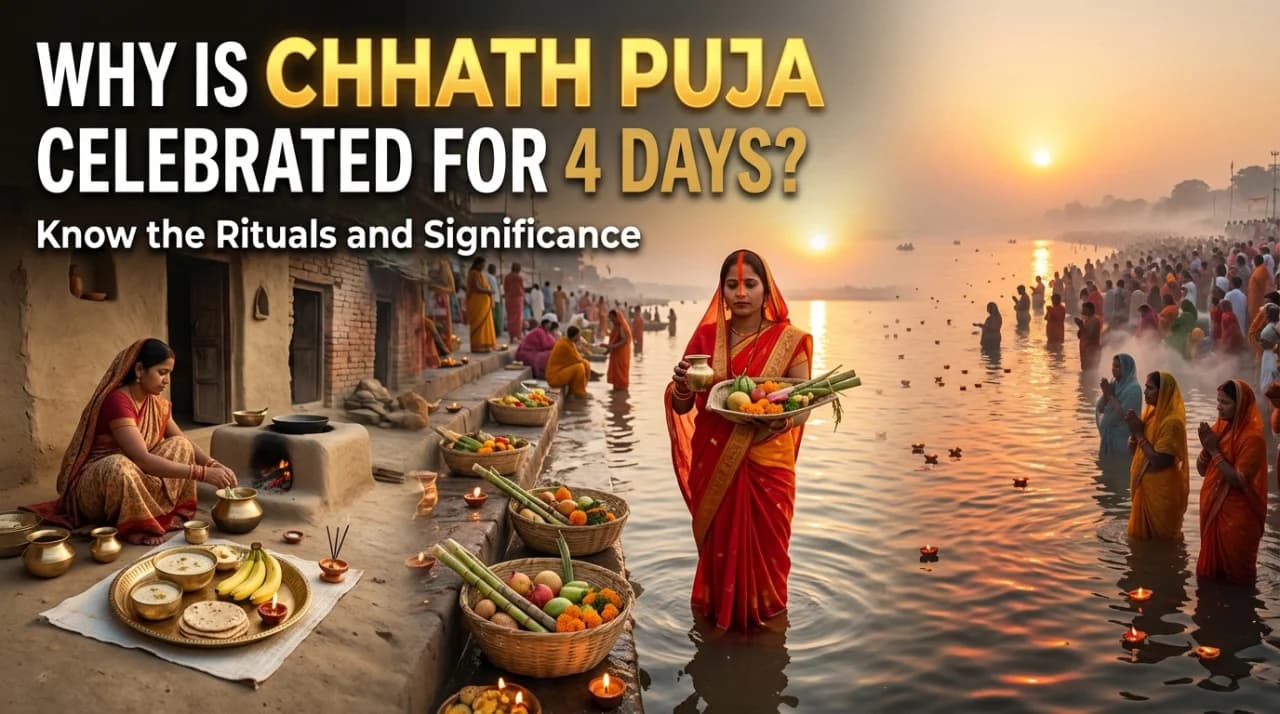
Chhath Puja is a four-day festival dedicated to Surya Dev and Chhathi Maiya. Discover the significance of Nahay Khay, Kharna, Sandhya Arghya and Usha Arghya, along with the vrat katha, traditional rituals and cultural importance of this sacred celebration.
Chhath Puja is one of the most special festivals dedicated to Surya Dev, the Sun God, and Chhathi Maiya. It is celebrated with great devotion in Bihar, Jharkhand, eastern Uttar Pradesh and parts of Nepal. Today, many families across India and abroad also celebrate this festival to stay connected with their culture and traditions.
Unlike many other Hindu festivals, Chhath Puja does not usually involve worshipping an idol. Instead, devotees offer prayers to the rising and setting Sun, often while standing in rivers, ponds or other water bodies. The festival is known for its simple rituals, strict fasting, traditional offerings and strong connection with nature.
But why does Chhath Puja last for four days? Each day has a different purpose, from preparing the home and body to offering prayers at sunset and sunrise. Together, these rituals express gratitude, discipline, faith and hope.
1. What Is the Historical and Spiritual Significance of Chhath Puja?
Chhath Puja is an ancient festival that honours the Sun as a source of life and energy. Sun worship has an important place in Hindu traditions, including ancient Vedic prayers. For devotees, the festival is an opportunity to thank Surya Dev for the sunlight and energy that support life on Earth.
Several popular stories are associated with Chhath Puja.
Karna and Surya Dev: According to the Mahabharata, Karna was the son of Surya Dev and Kunti. He is remembered for his generosity, courage and connection with the Sun God. Popular traditions associate Karna with offering prayers to Surya Dev while standing in water.
The Ramayana connection: Some traditional accounts say that Lord Rama and Goddess Sita performed Sun worship after returning to Ayodhya. This story is shared in connection with the festival, although versions of the tradition may differ.
Draupadi and the Pandavas: Another popular belief connects Chhath Puja with Draupadi and the Pandavas, who are said to have worshipped the Sun during a difficult period in their lives.
These stories highlight faith, patience and devotion. Many devotees believe that prayers to Surya Dev and Chhathi Maiya bring blessings for health, prosperity and family well-being.
2. Why Is Chhath Puja Celebrated for Four Days?
The four-day celebration follows a set of rituals, with each day preparing devotees for the next stage of worship.
Day 1: Nahay Khay
Nahay Khay marks the beginning of Chhath Puja. Devotees clean their homes, take a bath and prepare food according to the festival's traditional rules.
A simple meal may include rice, dal and pumpkin or bottle gourd curry. Food is often prepared without onion and garlic, depending on family customs.
The purpose of this day is to begin the festival with cleanliness and discipline. Families also start preparing the fruits, utensils and other items needed for the upcoming rituals.
Day 2: Kharna
The second day is known as Kharna. Devotees fast during the day and perform prayers in the evening before eating a special meal.
Traditional Kharna prasad often includes jaggery-based kheer and roti. The prasad is offered during worship and then shared with family members and others.
After Kharna, many devotees begin a strict Nirjala vrat, which traditionally means fasting without food or water until the morning rituals on the fourth day. This fast can be physically demanding, so anyone with health concerns should seek medical advice before attempting it.
Kharna represents self-control, dedication and preparation for the main offerings.
Day 3: Sandhya Arghya
Sandhya Arghya is one of the most important moments of Chhath Puja. On this day, devotees and their families visit riverbanks, ponds or designated ghats to offer prayers to the setting Sun.
They carry bamboo baskets, often called soop, filled with fruits, sugarcane, coconuts, thekua and other traditional offerings. Devotees may stand in the water while offering Arghya, a ritual in which water is offered to the Sun.
Folk songs, traditional clothing and the sight of lamps near the water make the evening especially memorable.
Sandhya Arghya is a way of expressing gratitude for the Sun's life-supporting energy. It also reminds devotees that sunset deserves respect just as much as sunrise.
Day 4: Usha Arghya
The final day begins early in the morning, when devotees gather before sunrise to offer prayers to the rising Sun. This ritual is known as Usha Arghya.
After the prayers, devotees complete their fast and receive prasad. Families often share the offerings with relatives, neighbours and community members.
Usha Arghya symbolises hope, renewal and new beginnings. It brings the four-day festival to an end and marks the completion of the devotees' prayers and fasting.
3. What Is the Chhath Vrat Katha?
The Chhath vrat katha refers to the stories and traditional accounts associated with the worship of Surya Dev and Chhathi Maiya. These stories are shared during the festival to explain its spiritual meaning and encourage devotion.
Chhathi Maiya is widely worshipped for the well-being of children and family members. Devotees pray to her for the happiness, health and prosperity of their families.
Different communities may tell different versions of the vrat katha. Some focus on families receiving blessings after sincere prayers, while others connect the festival with stories from Hindu epics.
The central message remains similar: faith, patience, gratitude and discipline are important parts of religious life.
4. Why Is Sandhya Arghya Important?
Sandhya Arghya is the evening offering made to the setting Sun. It is a distinctive feature of Chhath Puja because the festival honours both sunset and sunrise.
Sunset represents the end of a day and offers a moment to reflect on what has passed. By offering Arghya, devotees express gratitude for the energy and support they received throughout the day.
The ritual also brings families and communities together. People sing traditional Chhath songs, prepare offerings and help one another at the ghats.
The exact Sandhya Arghya time changes according to the date and location, so devotees should check a reliable local Panchang before performing the ritual.
5. Cultural and Social Importance of Chhath Puja
Chhath Puja is not only a religious celebration; it is also an important part of the cultural identity of many families.
Community bonding: People come together to clean ghats, prepare offerings and help with arrangements. The festival creates a strong sense of community.
Women's dedication: Women have traditionally played a leading role in observing Chhath, although men also participate in the fast and rituals.
Connection with nature: Fruits, sugarcane, bamboo baskets and other natural items are commonly used in the offerings. The festival encourages people to appreciate nature and the resources that support everyday life.
Family traditions: Many families pass Chhath songs, recipes and rituals from one generation to the next, helping younger people understand their cultural roots.
6. How Do Families Prepare for Chhath Puja?
Preparation often begins several days before the festival. Homes and cooking areas are cleaned, traditional ingredients are collected, and prasad such as thekua is prepared.
Families arrange bamboo baskets, fruits, sugarcane, lamps and other puja items. They may also help clean and organise the ghats where the evening and morning rituals will take place.
Keeping the surroundings clean is an important way to respect the spirit of the festival. Devotees should avoid leaving plastic, food waste or other materials in rivers and ponds.
Frequently Asked Questions About Chhath Puja
1. Why is Chhath Puja celebrated for four days?
Each day has a separate ritual: Nahay Khay, Kharna, Sandhya Arghya and Usha Arghya. Together, they form a sequence of preparation, fasting and Sun worship.
2. What are the main rituals of Chhath Puja?
The main rituals are Nahay Khay, Kharna, Sandhya Arghya and Usha Arghya.
3. What is Sandhya Arghya?
It is the evening ritual in which devotees offer prayers and water to the setting Sun.
4. What is the Chhath vrat katha?
It refers to traditional stories associated with Surya Dev, Chhathi Maiya and the importance of devotion during Chhath Puja.
5. Can people who are not from Bihar celebrate Chhath Puja?
Yes. People from different regions can participate respectfully in the festival and learn about its traditions.
Conclusion
Chhath Puja is a beautiful celebration of faith, discipline, gratitude and togetherness. Its four days, from Nahay Khay to Usha Arghya, each have a special meaning and bring devotees closer to their traditions.
By worshipping the setting and rising Sun, families express gratitude for life's everyday blessings and welcome a new beginning with hope. Whether celebrated beside a river or at a suitable local water body, Chhath Puja continues to bring communities together through devotion, cultural traditions and respect for nature.