Festival
Chhath Puja 2026: Dates, Nahay Khay, Kharna and Arghya Timings
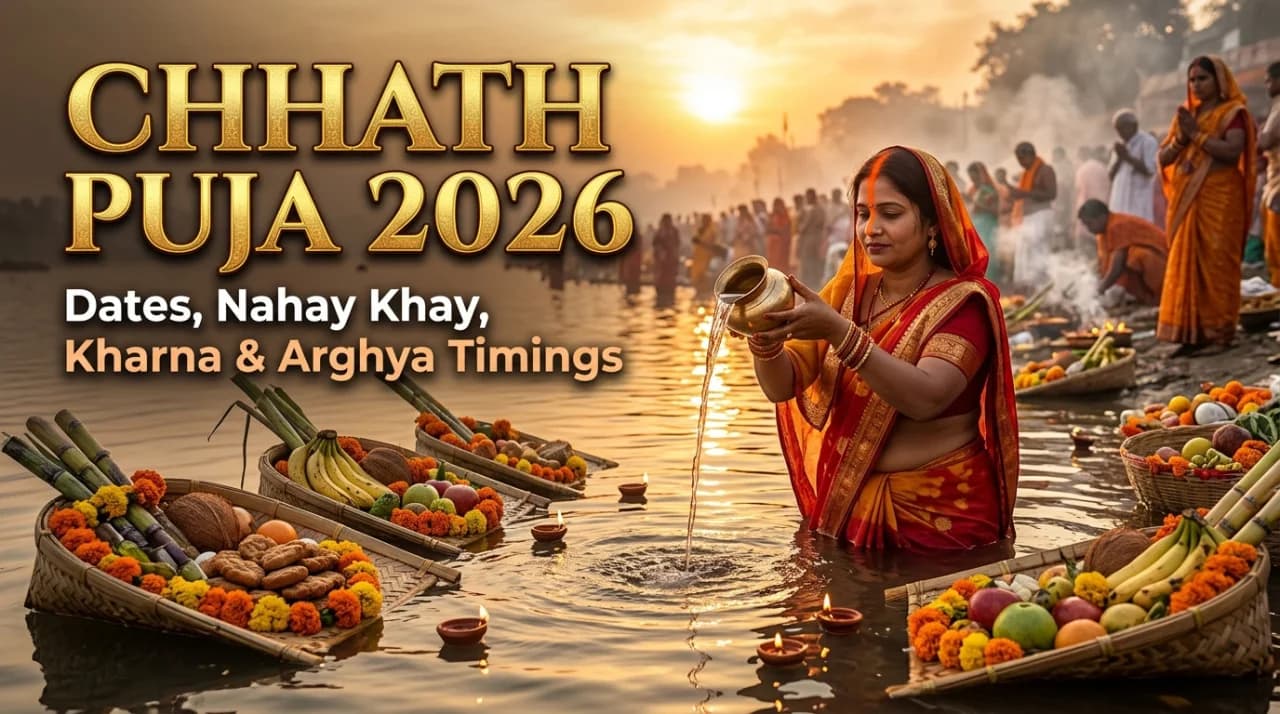
Chhath Puja 2026 will be observed from November 13 to 16. Explore the dates, Nahay Khay, Kharna, Sandhya Arghya, Usha Arghya timings, important rituals and the significance of worshipping Surya Dev.
Chhath Puja is one of the most meaningful festivals dedicated to Surya Dev, the Sun God, and Chhathi Maiya. It is celebrated with great devotion in Bihar, Jharkhand, eastern Uttar Pradesh and many other parts of India. People living abroad also celebrate this festival to stay connected with their traditions.
Unlike festivals where devotees worship idols, Chhath Puja focuses on offering prayers to the Sun, often while standing in a river or another water body. The festival is a way of expressing gratitude for sunlight, which supports life on Earth. Devotees pray for the health, happiness and well-being of their families.
Chhath Puja is observed over four days, with each day having its own rituals and significance. In 2026, the festival is expected to be observed from November 13 to November 16, according to the dates provided in this calendar.
Chhath Puja 2026: Dates and Timings
Here are the dates and timings listed for the four main days of Chhath Puja 2026.
Ritual | Date | Timing mentioned in the calendar |
|---|---|---|
Nahay Khay | November 13, Friday | Sunrise: 6:42 AM |
Lohanda and Kharna | November 14, Saturday | Moonrise: 10:20 AM* |
Sandhya Arghya | November 15, Sunday | Sunset: 5:28 PM* |
Usha Arghya | November 16, Monday | Sunrise: 6:44 AM* |
Shashthi Tithi begins | November 14 | 11:23 PM |
Shashthi Tithi ends | November 16 | 2:00 AM |
Please verify these timings against a trusted Panchang for your city before publishing or planning the rituals. Sunrise, sunset and moonrise timings can vary by location.
What Is the Astrological Significance of Chhath Puja?
In Hindu traditions, the Sun represents energy, confidence, discipline and vitality. Devotees worship Surya Dev during Chhath Puja to express gratitude and pray for prosperity, good health and family happiness.
Stories associated with the Mahabharata connect the festival with Karna, who was known for his devotion to Surya Dev. Another popular belief links Draupadi and the Pandavas with Sun worship during a difficult period in their lives. These stories are shared in different traditional accounts and reflect the importance of faith, courage and devotion.
Chhath Puja also gives special importance to the sixth lunar day, known as Shashthi. Chhathi Maiya is worshipped by devotees who pray for the well-being of children and family members.
One of the most distinctive parts of the festival is the worship of both the setting and rising Sun. Sandhya Arghya represents gratitude for the energy received throughout the day, while Usha Arghya welcomes a new morning with hope and devotion.
The Four Days of Chhath Puja 2026
Day 1: Nahay Khay — November 13
Nahay Khay marks the beginning of Chhath Puja. On this day, devotees take a bath, clean their homes and prepare for the upcoming rituals. Some devotees take a holy dip in the Ganga or another nearby water body.
A traditional meal may include lauki, or bottle gourd, and rice. Food is prepared carefully, following the family's customs and cleanliness practices associated with the festival.
This day is about preparing the body and mind for the days ahead. It also reminds devotees of the importance of discipline and purity during religious observances.
Day 2: Lohanda and Kharna — November 14
The second day is known as Lohanda and Kharna. Devotees observe a fast during the day and break it in the evening after offering prayers.
A traditional Kharna meal often includes kheer prepared with jaggery and roti. The exact dishes can vary between families and regions.
After Kharna, many devotees begin a strict Nirjala fast, traditionally observed without food or water, which continues until the final morning rituals. This fast can be physically demanding, so people should consider their health and seek medical advice if they have a condition that makes fasting risky.
Day 3: Sandhya Arghya — November 15
Sandhya Arghya is one of the most important moments of Chhath Puja. Families prepare offerings in bamboo baskets, often called soop, and include fruits, sugarcane, coconuts and traditional prasad.
Thekua, a sweet made mainly from wheat flour and jaggery, is among the festival's best-known offerings.
In the evening, devotees gather at riverbanks, ponds and other suitable water bodies to offer Arghya to the setting Sun. They stand in the water and pray with devotion, thanking Surya Dev for sustaining life.
The sight of families gathered near the water, with baskets of offerings and prayers during sunset, makes this ritual especially memorable.
Day 4: Usha Arghya — November 16
The final day begins early, as devotees gather before sunrise to offer prayers to the rising Sun. This ritual is known as Usha Arghya.
According to the timings in the supplied calendar, sunrise is listed as 6:44 AM, but the local time should be checked before the festival.
After offering Arghya, devotees complete their fast and receive prasad. This moment marks the end of the four-day observance and is often shared with family members and the wider community.
Usha Arghya symbolises hope, renewal and the beginning of a fresh day.
Thekua and Bamboo Baskets: Why Are They Important?
Thekua is a traditional sweet that holds a special place in Chhath Puja. Prepared with ingredients such as wheat flour and jaggery, it is offered as prasad and shared with family and friends.
Bamboo baskets are used to carry fruits and other offerings. Bamboo is a natural material, and its use reflects the festival's close connection with nature and traditional ways of life.
Devotees can also help keep the festival environmentally friendly by avoiding plastic decorations and ensuring that offerings and other waste are not left in rivers or ponds.
Chhath Puja and Health: What Should You Know?
Chhath Puja encourages discipline, outdoor participation and a connection with nature. Morning daylight also plays a recognised role in regulating the body's sleep-wake cycle, while sunlight helps the body produce vitamin D under suitable conditions.
However, claims that Chhath rituals activate a specific chakra, cure skin diseases or guarantee better health are not scientifically established. Standing in water or looking towards the Sun does not replace medical care. Devotees should never look directly at the Sun, and people who are unwell, pregnant or managing health conditions should take appropriate precautions before attempting a strict fast.
Zodiac-Based Traditions for Chhath Puja
Some devotees follow traditional astrological practices based on their zodiac or Moon sign. These customs may include prayers, donations or meditation:
Aries: Offer prayers and donate suitable items to someone in need.
Taurus: Consider donating white clothing or sugar.
Gemini: Spend time in prayer and focus on clear communication.
Cancer: Pray for family well-being and emotional peace.
Leo: Recite the Aditya Hridayam Stotram if it is part of your tradition.
Virgo: Donate fruits or vegetables.
Libra: Pray for balance and harmony in relationships.
Scorpio: Focus on courage, patience and positive intentions.
Sagittarius: Donate turmeric or yellow fruits.
Capricorn: Offer prayers for stability and professional growth.
Aquarius: Support a community or charitable cause.
Pisces: Practise quiet meditation at sunrise.
These are faith-based customs, not scientifically proven methods of changing health, finances or future events. Avoid throwing coins, powders, food or other materials into rivers; choose environmentally responsible forms of worship instead.
Frequently Asked Questions About Chhath Puja 2026
1. Can Chhath Puja be performed without a river nearby?
Yes. Some families use a clean pond, a designated community water area or a suitable water-filled space at home, according to their traditions. Ask a knowledgeable local priest or family elder about the appropriate method.
2. Can men observe Chhath Puja?
Yes. Both men and women can observe the fast and perform the rituals. Many families participate together.
3. What does Nirjala mean?
Nirjala means observing a fast without drinking water. It is a demanding practice and may not be suitable for everyone.
4. What is the Kosi ritual?
Kosi Bharna is a regional Chhath tradition observed by some families, often as an expression of gratitude after a wish is believed to have been fulfilled. Its details can vary by community.
5. Why do devotees worship the setting Sun?
Chhath Puja honours both sunset and sunrise. The setting Sun represents gratitude and acceptance, while the rising Sun represents hope and new beginnings.
Conclusion
Chhath Puja 2026 is an opportunity for devotees to express gratitude to Surya Dev and Chhathi Maiya through four days of prayer, fasting and family traditions. From Nahay Khay and Kharna to Sandhya Arghya and Usha Arghya, each ritual has a special place in the celebration.
More than just a religious festival, Chhath Puja reminds people to value nature, practise discipline and come together with faith and gratitude. Those planning to observe the festival should check their local Panchang for accurate timings and follow the rituals in a way that respects both personal health and the environment.