Festival
Diwali 2026: 7 Fascinating Stories Behind India’s Festival of Lights
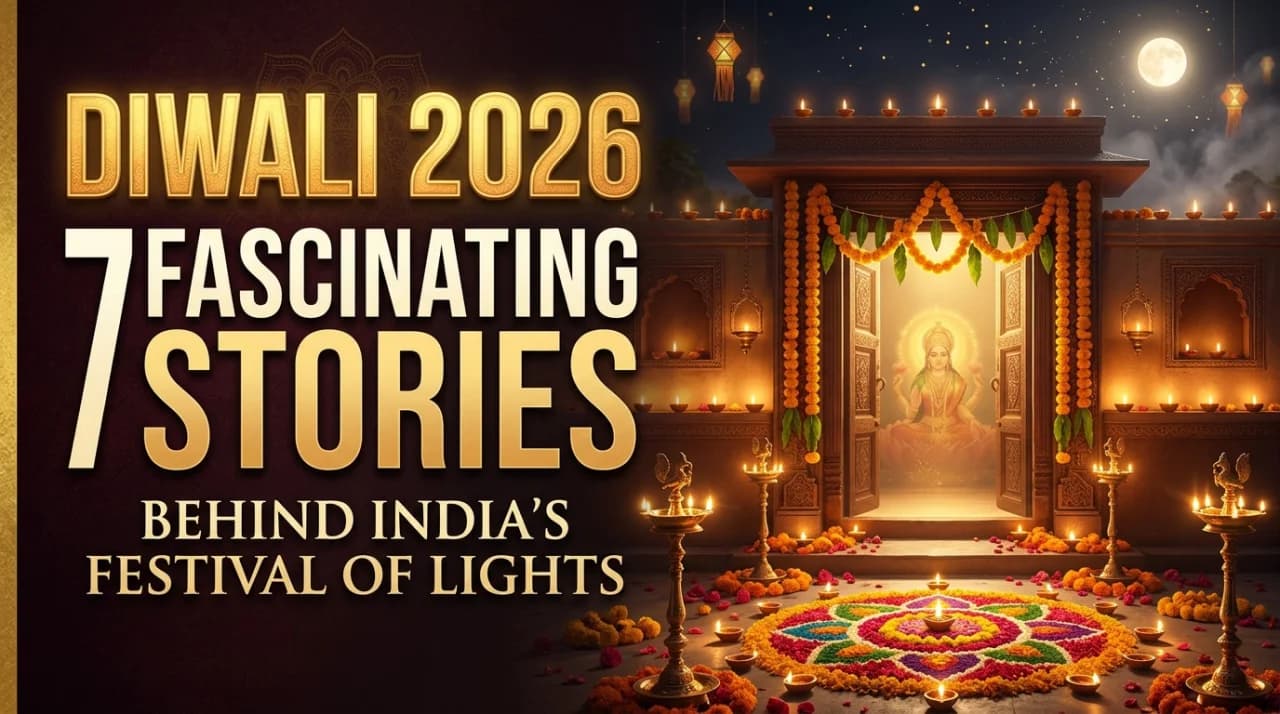
Diwali is celebrated in many beautiful ways across India. Discover seven regional traditions, from Lord Ram’s return to Ayodhya and Maa Kali’s worship to Gujarat’s New Year and Goa’s Narakasura effigies. Explore the key dates, rituals and spiritual meaning of Diwali 2026.
Diwali is one of the biggest festivals in India, but did you know that it is celebrated differently in different parts of the country? While some people celebrate Lord Ram’s return to Ayodhya, others worship Maa Kali or remember Lord Krishna’s victory over Narakasura.
In Gujarat, Diwali also marks the end of the traditional year for many businesses, while Goa celebrates by burning huge Narakasura effigies before sunrise.
Despite these differences, one thing connects everyone: the happiness of welcoming light, positivity and prosperity into life. Homes are cleaned, diyas are lit, sweets are shared, and families come together to celebrate.
As Diwali 2026 approaches, let’s explore seven beautiful ways India celebrates this festival and discover the stories behind these traditions.
Diwali 2026: Important Dates to Remember
Diwali is traditionally celebrated over five days, starting with Dhanteras and continuing through Bhai Dooj. In 2026, the main festival dates are:
6 November, Friday: Dhanteras
7 November, Saturday: Naraka Chaturdashi (Choti Diwali)
8 November, Sunday: Diwali and Lakshmi Puja
9 November, Monday: Govardhan Puja (Annakut)
11 November, Wednesday: Bhai Dooj
Note that Bhai Dooj falls on 11 November in this calendar, with 10 November being an additional day between the main celebrations. Puja timings can vary by location, so check a reliable local Panchang before planning your rituals.
1. North India: Celebrating Lord Ram’s Return to Ayodhya
In Uttar Pradesh, Delhi, Bihar and many other northern regions, Diwali is connected with the return of Lord Ram to Ayodhya after fourteen years of exile.
According to the Ramayana, the people of Ayodhya welcomed Lord Ram, Goddess Sita and Lord Lakshman by lighting rows of oil lamps. Today, families continue this tradition by decorating their homes with diyas, colourful rangoli and flower garlands.
Ayodhya is especially famous for its Deepotsav celebrations, when thousands of lamps illuminate the banks of the Saryu River.
On Diwali evening, families also perform Lakshmi-Ganesh Puja, exchange sweets and visit relatives. The main idea is simple: welcome goodness, celebrate togetherness and begin a new chapter with hope.
2. Punjab: The Meaningful Celebration of Bandi Chhor Divas
For Sikh families, Diwali coincides with Bandi Chhor Divas, a day associated with the release of Guru Hargobind Ji from Gwalior Fort.
According to Sikh tradition, Guru Hargobind Ji arranged for 52 kings who were imprisoned with him to be released as well.
The Golden Temple in Amritsar looks especially beautiful during this celebration, with its illuminated surroundings, prayers and devotional atmosphere.
For many people, Bandi Chhor Divas represents freedom, courage, compassion and standing up for others. It reminds us that festivals can carry powerful lessons that go beyond lights and celebrations.
3. Gujarat and Rajasthan: Welcoming Prosperity and a New Beginning
In Gujarat, Diwali is more than a festival of lights. It also marks the end of the Vikram Samvat year for many communities.
Business owners traditionally perform Chopda Pujan, during which new account books are worshipped before the beginning of the next financial year. The following day is celebrated as Bestu Varas, the Gujarati New Year. People greet one another with the words “Saal Mubarak,” wishing everyone a happy and prosperous year.
Rajasthan also celebrates Diwali with beautifully decorated markets, glowing homes and traditional floor designs called mandana.
For traders, families and business owners, these customs symbolise gratitude for the past year and hope for future success.
4. Maharashtra: Homemade Sweets, Rangoli and Family Traditions
Diwali in Maharashtra is a wonderful mix of food, family gatherings and meaningful rituals.
One of the biggest highlights is faral, a collection of traditional festive snacks prepared at home. Popular favourites include chakli, karanji, shankarpali and besan ladoo.
Many families wake up early on Naraka Chaturdashi for an abhyang snan, a traditional oil bath followed by bathing and wearing fresh clothes.
Diwali Padwa celebrates the bond between married couples, while Bhau Beej honours the relationship between brothers and sisters.
These traditions make the festival feel personal and warm. It is not just about decorating the house; it is also about making time for the people who matter most.
5. West Bengal, Odisha and Assam: The Night of Maa Kali
While many people associate Diwali with Goddess Lakshmi, several eastern regions focus on Maa Kali during the same new moon night.
In West Bengal, Kali Puja is celebrated with decorated pandals, devotional prayers, flowers, offerings and beautifully lit surroundings. Kolkata becomes especially lively as people visit different pandals with family and friends.
In Odisha, a traditional custom involves lighting kaunria kathi, or jute sticks, as part of rituals connected with remembering ancestors and symbolically guiding them on their journey.
Assam also celebrates Kali Puja, with devotees worshipping Maa Kali and lighting lamps in their homes.
These regional traditions show how the same festival can have different spiritual meanings while remaining an important part of Indian culture.
6. South India: Celebrating Lord Krishna’s Victory Over Narakasura
In Tamil Nadu, Karnataka, Andhra Pradesh and Telangana, Naraka Chaturdashi is an important part of the Diwali celebrations.
The day remembers Lord Krishna’s victory over the demon Narakasura, which symbolises the triumph of good over evil.
Families often wake up before sunrise, take a traditional oil bath, wear new clothes and share sweets with relatives. In many homes, the celebrations begin early in the morning rather than waiting until the evening.
Karnataka also celebrates Bali Padyami, associated with King Mahabali and traditions surrounding his visit to the earth.
The celebrations highlight a message that remains relevant even today: darkness does not last forever, and positive change is always possible.
7. Goa: Burning Narakasura Effigies Before Sunrise
Goa has one of the most visually striking Diwali traditions.
Before Naraka Chaturdashi, local communities create large effigies of Narakasura. These figures are often decorated with colourful materials and can take days or weeks to prepare.
Before sunrise, the effigies are burnt as part of celebrations remembering the defeat of Narakasura.
The event brings communities together and creates an exciting festive atmosphere across neighbourhoods.
It is a unique way of bringing an ancient story to life, reminding everyone of the victory of good over evil.
What Connects Every Diwali Celebration? Goddess Lakshmi
Although the stories differ across India, Lakshmi Puja remains an important Diwali tradition for many Hindu families.
People clean their homes, decorate entrances with rangoli, light diyas and offer prayers to Goddess Lakshmi, who is traditionally associated with wealth, prosperity and abundance. Lord Ganesha is also worshipped for wisdom and the removal of obstacles.
Rudraksha is another part of spiritual practice for some devotees. In Rudraksha traditions, the 7 Mukhi Rudraksha is associated with Goddess Mahalakshmi, while the 8 Mukhi Rudraksha is associated with Lord Ganesha.
Other devotional products offered by Rudralife include the Ganesh Rudraksha, Ganesh Lakshmi Bandh, Seven Mukhi Cash Box and Ganesh Lakshmi at Puja Place.
These items may be used as part of a personal spiritual practice, depending on an individual's beliefs and preferences.
Rudralife also offers Lakshmi-themed kits, including the Lakshmi Prosperity Kit, Lakshmi Fortune Kit and Lakshmi Blessings Rudraksha Kit. Before buying Rudraksha, it is sensible to ask about its authenticity and verification process rather than relying only on traditional water tests.
Frequently Asked Questions About Diwali 2026
1. When is Diwali in 2026?
Diwali and Lakshmi Puja fall on Sunday, 8 November 2026. The five-day festival begins with Dhanteras on 6 November.
2. Why is Diwali celebrated differently across India?
Different regions follow different religious stories and cultural traditions. Northern India remembers Lord Ram’s return, eastern India celebrates Kali Puja, and several southern regions mark Lord Krishna’s victory over Narakasura.
3. What is the Lakshmi Puja muhurat for Diwali 2026?
The exact auspicious timing depends on the city and local Panchang. Check the timings for your location before performing the puja.
4. Is Kali Puja the same as Diwali?
Kali Puja takes place on the same new moon night as Diwali in many eastern communities. It is a major part of the festive celebrations in West Bengal and is also observed in other regions.
5. Why does Gujarat celebrate its New Year after Diwali?
For many Gujarati communities, Diwali marks the end of the Vikram Samvat year. The next day, Bestu Varas, is celebrated as the Gujarati New Year.
6. Which Rudraksha is associated with Goddess Lakshmi?
The 7 Mukhi Rudraksha is traditionally associated with Goddess Mahalakshmi. Devotees may choose to include it in their spiritual practice according to their beliefs.
7. Can you wear Rudraksha during an oil bath?
It is generally advisable to remove Rudraksha before an oil bath, especially if soap or other products may come into contact with the beads.
Final Thoughts
Diwali may look different in every part of India, but its spirit remains beautifully connected.
From Ayodhya's glowing diyas and Kolkata's Kali Puja to Gujarat's new-year traditions and Goa's Narakasura effigies, every region adds its own story to the festival.
That is what makes Diwali so special. It is not just about lights, sweets or decorations. It is about family, faith, fresh beginnings and the hope that brighter days are ahead.
This Diwali, take a moment to learn about another region's traditions, light a diya with your loved ones and celebrate the many stories that make India's festival of lights truly unique.