Festival
Govardhan Puja 2026: Date, Puja Vidhi, Annakut and Krishna’s Story
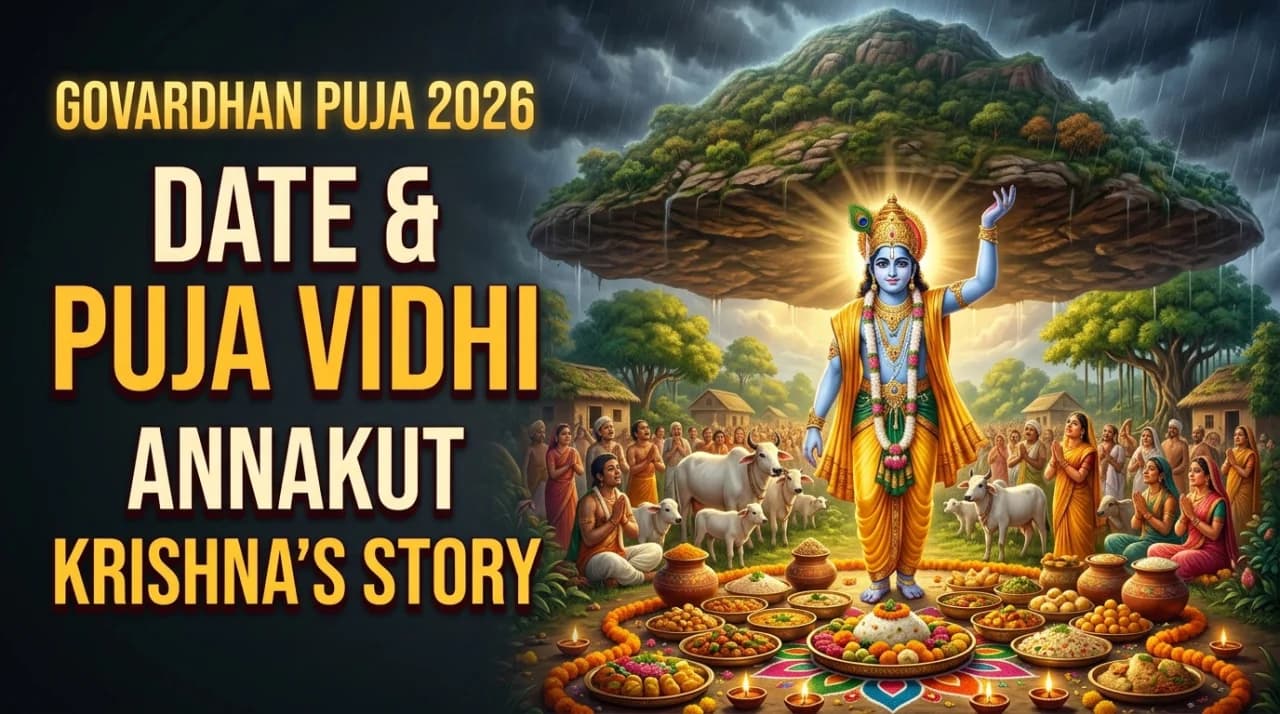
Govardhan Puja 2026 will be celebrated on 9 November, a day after Diwali. Discover the story of Shri Krishna lifting Govardhan Parvat, the significance of Annakut, traditional puja rituals, and simple ways to celebrate this auspicious festival at home.
Govardhan Puja is one of the most meaningful festivals celebrated just after Diwali. It reminds devotees of the time when Shri Krishna lifted the mighty Govardhan Parvat on his little finger to protect the people and cattle of Vrindavan from heavy rainfall. The story is not only about Krishna’s divine power but also about gratitude, faith, and respecting nature.
In 2026, Govardhan Puja is expected to be celebrated on Monday, 9 November, following Diwali on Sunday, 8 November. On this day, families prepare delicious food offerings, worship Shri Krishna, honour cows, and remember the importance of living in harmony with nature.
One of the biggest highlights of the festival is Annakut, where different food items are arranged as a mountain and offered to Shri Krishna. For devotees, this is a way of expressing gratitude for the food, water, and other resources that make everyday life possible.
Key Takeaways
Govardhan Puja 2026 falls on Monday, 9 November, according to the supplied festival calendar.
The festival celebrates Shri Krishna lifting Govardhan Parvat to protect Vrindavan.
Annakut is a special offering of different food items made to Shri Krishna.
Many families worship cows and perform Govardhan Parikrama as part of their traditions.
The festival teaches us to respect nature, appreciate what we have, and remain grateful.
Govardhan Puja 2026: Date and Important Details
Govardhan Puja is observed on Kartik Shukla Pratipada, the first day of the bright lunar fortnight in the Hindu month of Kartik. It generally falls the day after Diwali, although the exact observance can depend on the local panchang and tithi timings.
Here are the important dates to remember for the 2026 celebrations:
Diwali (Lakshmi Puja): Sunday, 8 November 2026
Govardhan Puja and Annakut: Monday, 9 November 2026
Bhai Dooj: Wednesday, 11 November 2026
The exact morning and evening puja muhurat for New Delhi should be checked against a reliable 2026 panchang before publication, as the timings depend on the local tithi and sunrise.
Govardhan Puja is also connected with other regional celebrations. In Gujarat, the day is associated with Bestu Varas, which marks the Gujarati New Year. In Maharashtra and Karnataka, it is celebrated as Bali Pratipada or Padwa.
The Fascinating Story of Shri Krishna and Govardhan Parvat
The story of Govardhan Puja takes us back to Vrindavan, where Shri Krishna spent his childhood among cowherds, cows, and the beautiful natural surroundings of Vraj.
According to the traditional story, the people of Vrindavan used to organise a grand worship ceremony for Indra, the god associated with rain and thunderstorms. They believed that pleasing Indra would bring rain and help their crops and cattle.
One day, young Krishna asked the villagers why they performed the ritual. He explained that Govardhan Parvat, the surrounding land, and nature provided grass for their cows, water for their needs, and resources that supported their lives.
Krishna encouraged the villagers to show their gratitude to Govardhan Parvat instead.
When Indra learned about this change, he became angry and sent heavy rainfall towards Vrindavan. The rain continued, threatening the villagers and their cattle.
Seeing everyone in danger, Shri Krishna lifted the entire Govardhan Parvat on the little finger of his left hand. The people and animals gathered beneath the mountain, where they remained protected from the storm.
After seven days of rainfall, Indra realised that Krishna's divine power was beyond his understanding. He accepted his mistake, and the storm finally came to an end.
This story carries an important message even today. It reminds us that nature plays a major role in our lives and deserves our respect. It also teaches us that faith, humility, and compassion are more meaningful than pride.
Annakut: Why Is a Mountain of Food Offered to Krishna?
Annakut is one of the most beautiful traditions associated with Govardhan Puja. The word Annakut means “mountain of food,” and the offering represents gratitude for the nourishment provided by nature.
On this day, families prepare a variety of dishes, including rice, dal, vegetables, kadhi, puri, sweets, and other traditional foods. These dishes are arranged before Shri Krishna as an expression of devotion.
Many temples celebrate the occasion with Chhappan Bhog, which traditionally consists of 56 different food offerings. The exact dishes and customs can vary from one region and temple to another.
The best part of Annakut is that it does not have to be an elaborate affair at home. Families can prepare a few favourite dishes and offer them with sincere devotion.
The tradition reminds us that food should never be taken for granted. Every meal represents the effort of farmers, the value of natural resources, and the importance of sharing with others.
How to Perform Govardhan Puja at Home
Govardhan Puja can be performed at home with simple arrangements and devotion. Families may follow their household traditions or consult a local priest for specific rituals.
Here is a basic guide to the traditional puja vidhi.
1. Create a small Govardhan
Make a small hill using cow dung or clay in a clean courtyard or designated puja area. Decorate it with flowers, green grass, and small diyas.
2. Take a sankalp
Begin the puja with a prayer and sankalp, expressing your intention to worship Shri Krishna and Govardhan. Traditional sankalp rituals may include your name, gotra, and the occasion.
3. Worship Shri Krishna
Offer flowers, roli, rice, Tulsi leaves, milk, and other customary items according to your family's traditions.
4. Prepare Annakut
Arrange the food you have prepared in front of Shri Krishna. Offer it with gratitude and pray for peace, happiness, and well-being for your family.
5. Perform Govardhan Parikrama
Walk around the Govardhan representation while chanting Shri Krishna's name. Seven rounds are followed in some household traditions, though practices may differ.
6. Perform Gau Puja
Cows are honoured because of their special place in Shri Krishna's life and traditional Indian culture. Where appropriate, devotees offer flowers, apply tilak, and provide suitable fodder.
7. Complete the aarti
Conclude the puja with aarti and distribute the Annakut as prasad among family members and neighbours.
Remember, the purpose of the festival is not to make the arrangements expensive or complicated. What matters most is the devotion and gratitude behind the offering.
Which Rudraksha Is Associated With Govardhan Puja?
Govardhan Puja is connected with Shri Krishna, who is traditionally regarded as an avatar of Lord Vishnu. Some devotees also use the occasion to focus on spiritual practices and symbols associated with prosperity.
Two Rudraksha types are commonly associated with these devotional themes:
10 Mukhi Rudraksha: Traditionally associated with Lord Vishnu, it is chosen by some devotees as a symbol of protection and spiritual devotion.
7 Mukhi Rudraksha: Traditionally associated with Goddess Mahalakshmi in some Rudraksha traditions, it is chosen by devotees who pray for prosperity and abundance.
These associations come from religious traditions and beliefs; wearing Rudraksha should not be presented as a guarantee of wealth or protection. Devotees who wish to purchase one should check its authenticity and the credibility of the seller.
Frequently Asked Questions About Govardhan Puja 2026
1. When is Govardhan Puja in 2026?
Govardhan Puja is expected to be observed on Monday, 9 November 2026. Confirm the date against a reliable local panchang before final publication.
2. Why do we celebrate Govardhan Puja?
It commemorates Shri Krishna lifting Govardhan Parvat to protect the people and cattle of Vrindavan from heavy rainfall sent by Indra.
3. What does Annakut mean?
Annakut means “mountain of food.” Devotees offer a variety of dishes to Shri Krishna as a symbol of gratitude and abundance.
4. Is Govardhan Puja celebrated after Diwali?
Yes, it is generally celebrated the day after Diwali. In 2026, the expected dates are 8 November for Diwali and 9 November for Govardhan Puja.
5. Why are cows worshipped on Govardhan Puja?
Cows are closely connected with Shri Krishna's childhood and his life as a cowherd. Gau Puja honours their traditional importance and their contribution to rural life.
6. How many times should we perform Govardhan Parikrama at home?
Some traditions recommend seven rounds around the small Govardhan representation. Customs can vary among families and regions.
7. Which Rudraksha is associated with Govardhan Puja?
Some devotees choose the 10 Mukhi Rudraksha, associated with Lord Vishnu, or the 7 Mukhi Rudraksha, associated with Goddess Mahalakshmi in certain traditions.
8. Is Govardhan Puja the Gujarati New Year?
In Gujarat, the day is associated with Bestu Varas, the Gujarati New Year. The festival is also observed as Bali Pratipada or Padwa in parts of India.
Final Thoughts
Govardhan Puja is more than a festival celebrated after Diwali. It is a reminder to appreciate nature, respect animals, share food, and remain grateful for the things that support our lives every day.
The story of Shri Krishna lifting Govardhan Parvat teaches us that true strength lies in protecting others and standing together during difficult times.
This Govardhan Puja, families can celebrate by preparing Annakut, lighting diyas, offering prayers, and spending meaningful time together. Even a small offering made with a sincere heart can carry a beautiful message of gratitude and devotion.