Katha
Why Is Chhath Puja Celebrated? Stories from the Ramayana and Mahabharata
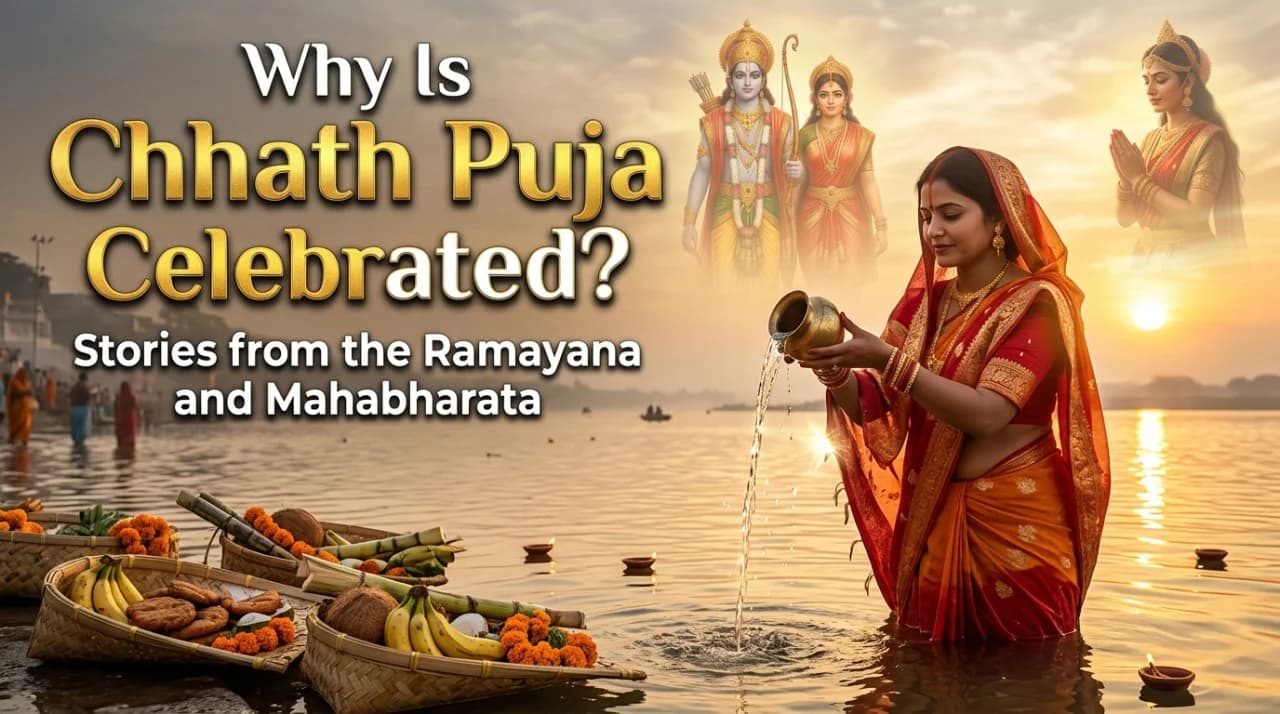
Discover why Chhath Puja is celebrated and explore the fascinating stories of Surya Dev, Karna, Sita and Draupadi from the Ramayana and Mahabharata. Learn about the festival’s history, traditions and spiritual significance.
Chhath Puja is one of the most special festivals celebrated in India, especially in Bihar, Jharkhand, eastern Uttar Pradesh and parts of Nepal. Over the years, its popularity has spread across the country and even to different parts of the world. Every year, thousands of devotees gather near rivers, ponds and other water bodies to offer prayers to the Sun God and seek blessings for their families.
The festival is known for its devotion, discipline and beautiful traditions. But have you ever wondered how Chhath Puja started? What is the story behind Chhathi Mai, and why do devotees offer prayers to the Sun God during sunset and sunrise?
Several fascinating stories from Hindu mythology explain the origins of Chhath Puja. These stories connect the festival with Surya Dev, Chhathi Mai, the Ramayana, the Mahabharata and even the agricultural traditions of India.
What Is Chhath Puja and Why Is It Celebrated?
Chhath Puja is a four-day Hindu festival dedicated mainly to Surya Dev, the Sun God, and Chhathi Mai, who is associated with the protection and well-being of children.
The festival is generally celebrated six days after Diwali during the Hindu lunar month of Kartik, which usually falls in October or November. It is also known as Surya Shashthi or Chhath Parva. The word 'Chhath' is commonly connected with the sixth day of the lunar fortnight, when the main worship takes place.
Unlike many other festivals, Chhath Puja includes prayers to the setting Sun as well as the rising Sun. Devotees believe that offering arghya, or water, to Surya Dev expresses gratitude for life, energy and the blessings of nature.
Although women have traditionally played a major role in observing the festival, Chhath Puja is not limited to any particular gender. Men and women participate in the rituals with equal devotion.
The festival also holds a special place in the hearts of families who pray for the health, happiness and long life of their children.
The Story of Chhathi Mai and Queen Malini
One popular story associated with Chhath Puja appears in traditional accounts linked to the Brahmavaivarta Purana.
According to this story, King Priyavrat and his wife, Queen Malini, deeply wished to have a child. However, despite their prayers, they remained childless for a long time.
Hoping for a blessing, the royal couple performed a Putrakameshti Yajna, a traditional ritual associated with the wish to have a child. During the ceremony, sacred kheer, or rice pudding, was offered as part of the ritual, and Queen Malini later became pregnant.
Unfortunately, the couple's happiness did not last long, as the child was born lifeless. The king and queen were heartbroken by the loss. Overwhelmed by grief, the queen went towards a river, where she encountered a divine woman.
The woman introduced herself as Devasena, also known as Shashthi in some traditional accounts. She explained that she was associated with the protection of children and the blessing of parenthood.
Devasena advised the queen to worship her and offer prayers to the Sun God. Following this advice, the royal couple performed the worship with faith and devotion. According to the legend, they were eventually blessed with a child.
This story is often connected with the tradition of Chhath Puja. It explains why Chhathi Mai is worshipped by devotees who pray for their children's health, happiness and well-being.
The Connection Between Chhathi Mai and Goddess Shashthi
Chhathi Mai is an important figure in the religious traditions associated with Chhath Puja. She is often connected with Goddess Shashthi, who is worshipped in several Hindu traditions as a protector of children.
Some traditional explanations describe Shashthi as a divine manifestation associated with Prakriti, or nature. These accounts connect her with creation, motherhood and the continuation of family lineages.
In folk traditions, Chhathi Mai is also regarded as a goddess who blesses families and protects young children. Devotees pray to her with the hope of bringing peace and happiness into their homes.
Although Chhath Puja is mainly recognised as a festival dedicated to Sun worship, the devotion offered to Chhathi Mai adds another important layer of meaning. It brings together gratitude towards nature and prayers for family well-being.
Different regions and communities may tell these stories in slightly different ways, which shows how Indian festivals continue to develop through local beliefs and oral traditions.
Chhath Puja in the Ramayana
The Ramayana is another important source of stories associated with Chhath Puja.
According to a popular local tradition, Lord Rama and Goddess Sita performed Sun worship after returning to Ayodhya following their period of exile. Some versions connect these prayers with the need to perform religious atonement after the defeat of Ravana.
In Munger, Bihar, a local belief connects Goddess Sita with the observance of Chhath Puja. The Sita Charan Mandir, associated with impressions of her feet, is linked to this regional tradition.
For devotees, these stories make the festival even more meaningful. They connect Chhath Puja with the lives of revered figures from Hindu mythology and highlight the importance of prayer, discipline and devotion.
However, these accounts are best understood as traditional and regional beliefs rather than as a single universally accepted explanation of the festival's origins.
The Mahabharata Connection: Karna and Draupadi
Chhath Puja is also connected with the Mahabharata, one of India's most famous epics.
Karna, the son of Surya Dev, is often associated with Sun worship. According to popular traditions, Karna regularly offered prayers to the Sun God and performed rituals while standing in water. His devotion and discipline are commonly linked to practices that resemble some of the rituals followed during Chhath Puja today.
Another popular belief connects Draupadi and the Pandavas with the festival. According to certain retellings, Draupadi observed rituals associated with Sun worship while seeking divine support during a difficult period in the Pandavas' lives.
These stories are especially significant because they show how devotion to Surya Dev has remained an important part of Indian religious traditions.
For many devotees, Karna's dedication represents faith, discipline and gratitude, while the stories associated with Draupadi highlight the importance of prayer during challenging times.
Chhath Puja and Its Connection With Agriculture
Chhath Puja is not only a religious festival; it also reflects India's close relationship with nature and agriculture.
Kartik falls during an important period in the agricultural calendar, when certain crops, including rice in many regions, are harvested. The festival therefore provides an opportunity for farming communities to express gratitude for the harvest and the natural resources that support life.
The Sun plays an essential role in agriculture by providing light and warmth, helping plants grow and supporting the natural cycles of the environment. Worshipping Surya Dev is one way devotees express appreciation for these life-giving forces.
Water is equally important during Chhath Puja. Devotees gather at rivers, ponds and other water bodies to perform their prayers, making the festival closely connected with both sunlight and water.
The use of traditional offerings and the careful preparation of prasad also reflect the importance of food, farming and community participation.
Why Chhath Puja Remains Special Today
Even in modern times, Chhath Puja continues to bring families and communities together. People living far from their hometowns often return to celebrate the festival with their loved ones. Others organise celebrations in cities and abroad, keeping their cultural traditions alive.
The festival teaches values such as patience, self-discipline, respect for nature and gratitude for life's blessings. Its rituals also remind people of the importance of family, community and faith.
The stories of Chhathi Mai, Karna, Sita and Draupadi add depth to these traditions, although the exact origins of Chhath Puja cannot be explained through one legend alone.
Ultimately, Chhath Puja is much more than a festival involving prayers to the Sun. It is a celebration of life, nature, family and gratitude. Through its beautiful rituals and age-old stories, it continues to connect generations with India's rich cultural and spiritual heritage.