Katha
Why Is Karwa Chauth Celebrated? 4 Stories That Explain Its Meaning
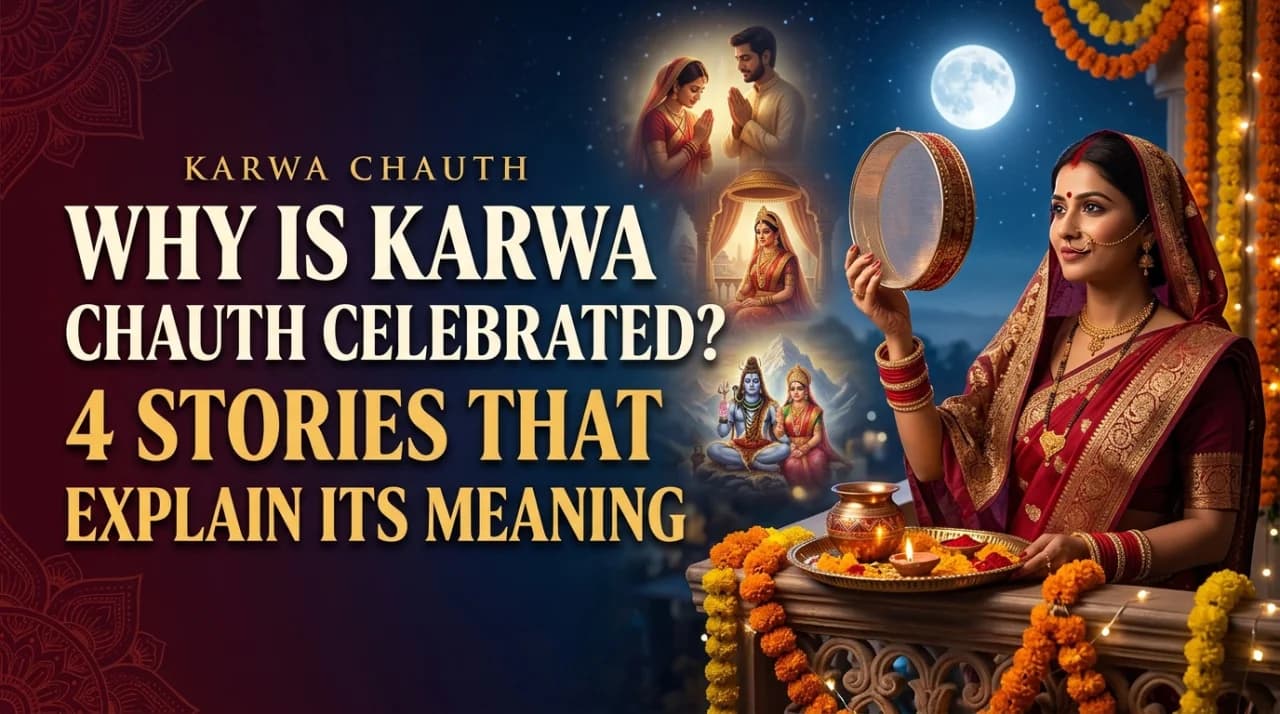
Discover four popular stories behind Karwa Chauth, featuring Queen Veervati, Draupadi, Karwa and Savitri. Explore the legends, traditions and cultural significance of this beloved Hindu festival.
Karwa Chauth is one of the most popular Hindu festivals, especially in North and Northwest India. It is a special day for many married women who observe a fast and pray for the long life, health and well-being of their husbands. The festival is filled with beautiful traditions, including applying mehndi, wearing traditional clothes, performing puja and waiting for the moon to rise.
For many women, fasting throughout the day without food or water is challenging. Still, they observe the tradition with faith and devotion. In recent years, some husbands have also started fasting alongside their wives, making the celebration a symbol of mutual love and support.
But have you ever wondered how Karwa Chauth began and why its stories are still remembered today? Several popular legends are connected with this festival. These stories highlight faith, courage, determination and the importance of relationships.
What Is the Meaning of Karwa Chauth?
The word Karwa refers to an earthen pot traditionally used during the festival, while Chauth means the fourth day of the lunar fortnight. Karwa Chauth is observed on the fourth day of Krishna Paksha in the Hindu lunar month of Kartik, according to the North Indian Purnimanta calendar.
During the festival, women perform puja, listen to the Karwa Chauth Katha and offer arghya, or water, to the Moon God. In many families, women look at the moon through a sieve before completing their prayers and breaking the fast.
The exact origin of Karwa Chauth is not clearly established. However, several traditional stories explain its religious and cultural importance.
1. The Story of Queen Veervati
One of the most popular Karwa Chauth stories is about Queen Veervati, who was the only sister among seven loving brothers.
According to the legend, Veervati observed her first Karwa Chauth fast at her parents' home. She followed the strict fast from sunrise and waited for the moon to appear in the evening. As the hours passed, she became extremely hungry and thirsty.
Her brothers could not bear to see their sister suffering. They decided to trick her by creating the appearance of a moon using a mirror or light placed in a tree. Believing that the moon had risen, Veervati ended her fast.
Soon afterwards, she received the heartbreaking news that her husband had died. Devastated, she began crying and praying for help.
According to the story, Goddess Parvati appeared before Veervati and explained that her brothers had tricked her into breaking the fast before the actual moonrise. The queen then observed the fast again with complete devotion. Impressed by her faith, the divine powers restored her husband's life.
This story is often shared during Karwa Chauth puja. It reminds devotees of the importance of faith, patience and sincerity while following religious traditions.
2. The Story of Draupadi and Lord Krishna
Another popular story associated with Karwa Chauth comes from the Mahabharata and features Draupadi, the wife of the five Pandavas.
According to a commonly told version of the legend, Arjuna once went away to the Nilgiri mountains for penance. During his absence, the other Pandavas faced difficulties, leaving Draupadi worried about their well-being.
Unsure of what to do, she turned to Lord Krishna for guidance. Krishna narrated a story about Goddess Parvati observing a fast during a difficult situation. He explained how devotion and prayer could offer spiritual strength during challenging times.
Following his advice, Draupadi observed the prescribed fasting rituals with faith and prayed for the safety and well-being of the Pandavas.
The story is remembered as an example of how people turn to prayer during difficult moments. It also highlights Draupadi's concern for her family and her determination to support her loved ones.
Although this version is associated with Karwa Chauth in popular tradition, details of the story may vary across retellings.
3. The Story of Karwa and Her Husband
The legend of Karwa is another story often narrated during the festival. It tells the tale of a devoted woman whose courage and determination helped save her husband.
According to the story, Karwa deeply loved her husband. One day, while he was bathing in a river, a crocodile attacked him.
Karwa acted quickly and bravely. Using cotton yarn, she tied up the crocodile and called upon Yamraj, the Hindu god associated with death and justice, for help. She asked him to punish the crocodile and save her husband's life.
When Yamraj hesitated, Karwa warned that she would curse him if he refused to help. Her determination and devotion impressed the god. He sent the crocodile to the realm of death and restored her husband's life.
The story explains why Karwa is remembered as a symbol of courage and devotion. In some traditions, women pray to Karwa Mata for the happiness and well-being of their families.
It also shows that devotion, in these traditional stories, is not presented as helplessness. Karwa takes action and stands up for the person she loves.
4. The Story of Savitri and Satyavan
The story of Savitri and Satyavan is one of the most famous legends in Hindu tradition. Although it is not exclusively a Karwa Chauth story, it is often discussed when explaining the importance of a wife's devotion and determination.
According to the Mahabharata, Savitri was married to Satyavan, even though she knew that he was destined to die at a young age. When Yamraj arrived to take Satyavan's life, Savitri refused to give up easily.
She followed Yamraj and continued speaking to him with wisdom, respect and determination. Impressed by her devotion and intelligence, Yamraj offered her several boons, except the return of her husband's life.
Savitri cleverly asked for blessings that included having children. Since this wish could not be fulfilled without Satyavan being alive, Yamraj eventually restored her husband's life.
Savitri's story is remembered as an example of courage, intelligence and unwavering commitment. It teaches that determination and wisdom can help people face even the most difficult situations.
Why Do We Celebrate Karwa Chauth?
The stories above help explain the traditional beliefs associated with Karwa Chauth. However, the festival's cultural significance may also be connected with the social and agricultural life of earlier communities.
Prayers for Soldiers and Family Members
One popular historical explanation connects the festival with communities in North and Northwest India, where many men travelled far from home for military service, trade or other work.
Their families faced uncertainty about their safety, especially when communication over long distances was difficult. Women offered prayers for their husbands and loved ones, hoping for their safe return and well-being.
Although this explanation is widely repeated, it should be understood as a traditional interpretation rather than a fully established account of the festival's origin.
A Celebration of Friendship and Community
In earlier times, married women in some communities had limited opportunities to travel or meet friends after marriage. Festivals provided a chance to gather, share experiences and build friendships.
Karwa Chauth gatherings allowed women to meet, sing traditional songs, listen to stories and exchange gifts such as bangles, sindoor and other festive items. These relationships offered a sense of belonging and emotional support.
This community aspect remains important today. Women often celebrate together, get ready with friends and relatives, and share the excitement of the evening puja.
Connection With the Agricultural Season
Another traditional explanation links Karwa Chauth with the beginning of the Rabi crop season in parts of North India. Wheat grains were important to farming families, and the karwa pot was sometimes associated with agricultural prosperity and prayers for a successful harvest.
These customs reflect the close relationship between festivals, farming and everyday life in traditional Indian communities.
Karwa Chauth in Modern Times
Karwa Chauth continues to evolve with changing lifestyles. While many women follow traditional fasting rituals, others celebrate through prayer, family gatherings or simpler customs.
Husbands also increasingly choose to fast alongside their wives. This shared observance can represent mutual care, understanding and respect rather than placing the entire responsibility of the tradition on women.
It is also important to remember that fasting is a personal choice. People should consider their health and seek medical guidance if fasting without food or water may be unsafe for them.
Final Thoughts
Karwa Chauth is more than a day of fasting for many Indian families. Its popular stories of Veervati, Draupadi, Karwa and Savitri reflect themes of faith, courage, intelligence and devotion.
From traditional puja rituals to friendships formed during festive gatherings, the celebration carries both religious and cultural meaning. As traditions continue to change, families can celebrate Karwa Chauth in ways that respect their beliefs while embracing love, equality and mutual support.